The concept behind the revolution of precision medicine is rather straightforward – to treat patients according to their individual genetic constitution. However, the execution of such an approach involves a humongous volume of data collection.
If we depend on our conventional manual techniques, everything comes to a standstill. Our conventional techniques will never be able to deliver the precision, speed, and efficiency required for the next-generation healthcare system.
For processing enormous biological data into clinically actionable results at lightning speed, high-throughput technology is no longer a luxury add-on for advanced labs but the backbone of next-generation medicine.
The Rise of Precision Medicine and Its Data-Intensive Demands
There is an exciting transformation occurring in oncology, rare diseases, and pharmacogenomics research. Rather than having a standardized therapy, treatments are being personalized based on molecular profiles. Projects such as All of Us from the NIH show how large datasets are revolutionizing our world today.
But with this revolution comes a new data challenge that we are faced with: a huge data bottleneck. Analysis for just a single patient involves combining multi-omics data such as genomics, transcriptomics, and metabolomics. To be able to provide prompt and accurate medical treatment decisions, there needs to be a fast and efficient pipeline in place.
The issue with the current laboratory environment, which utilizes manual pipetting techniques, is that these systems simply are not equipped to manage the volume of information that needs to be processed for personalised medicine applications. It is simply beyond the physical capability of humans to do so.
Why Traditional Laboratory Workflows Can’t Scale Precision Medicine
But upon closer examination of conventional lab settings, it quickly becomes clear how limiting manual interventions can be. Variability in humans is an inherent quality. While even an experienced scientist will make subtle variations when using pipettes and working with samples, these small inconsistencies add up in larger diagnostic laboratories.
This poses a serious obstacle to validating biomarkers and conducting scientific research. According to one article published by Nature about the problem of reproducibility in science, a surprisingly large proportion of scientists find it difficult to reproduce their experiments. This is due to minor differences that occur in manual lab techniques.
As increasing pressure mounts to provide prompt and flawless results, the cost and inefficiency of manual repetition become prohibitive in clinical trials, biobanks, and national genetic screening initiatives.
High-Throughput Laboratory Automation as the Backbone of Modern Biotech
And here comes automation in laboratory high throughput to change the game. In a contemporary biotech world, laboratory automation means the efficient fusion of robots, digital sample tracking systems, and software control over operations aimed at processing thousands of samples at once.
Eliminating the limitations of humans, such technology allows reducing the time needed to process sequencing and screening protocols. As stated by Nature Biotechnology’s observations about biotech workflow, automation becomes critical in fast-tracking processes from biological samples to actionable medical information.
Moreover, with the help of software control in automation, it will be possible to guarantee that the results obtained through a certain assay protocol in one city will match those in another city without any difference whatsoever. This is essential in validating targeted therapies needed for precision medicine.
Key Benefits of Automated Liquid Handling in Precision Medicine Pipelines
Liquid handling is at the very core of any laboratory that performs high-throughput processing, and automation of this process brings about many tangible benefits right away. For instance, the level of precision that one can achieve when preparing samples or dispensing reagents is exceptional. Given the nature of genomics, working with micro volumes, even fractions of microliters, makes all the difference.
According to an analysis done by Grand View Research, there is a huge increase in demand for liquid handling solutions across the globe due to their increased efficiency and reduced potential for errors associated with drug discovery and clinical research. Automating this process eliminates the risks of contamination in a diagnostic workflow.
Moreover, the process is highly cost-effective since it enables experienced personnel to concentrate on other more important activities while saving time. Another benefit of such technologies is the ability to maintain accurate digital tracking records.
How Automated Liquid Handling Instruments Enable Scalable Precision Medicine Workflows
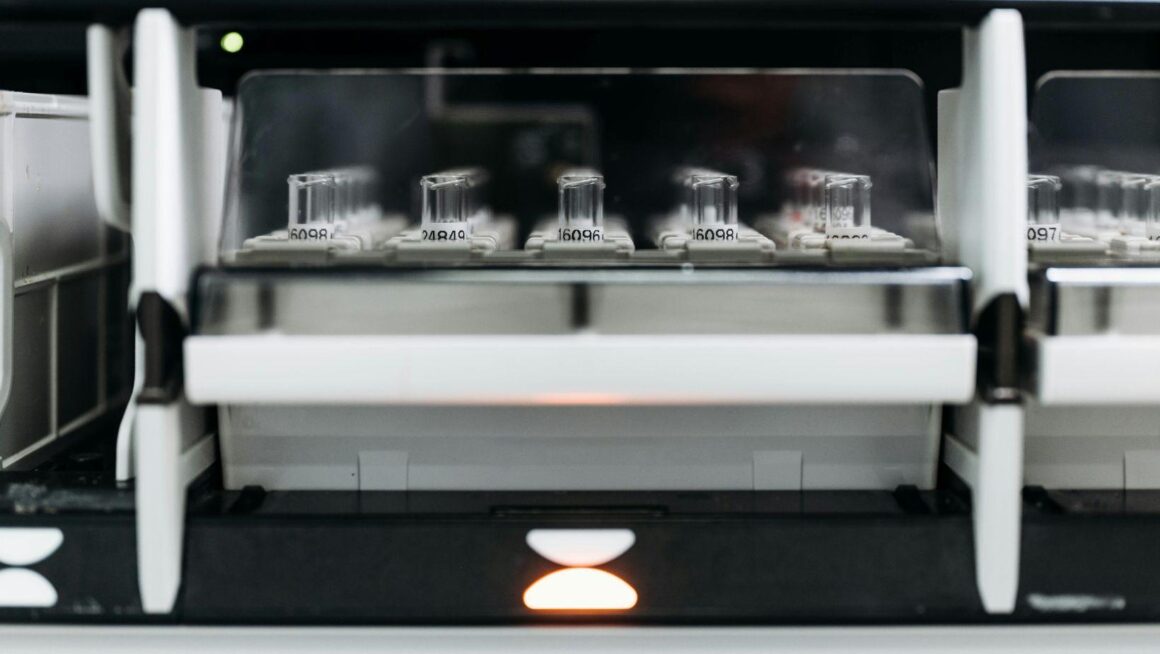
Every critical phase of the precision medicine pipeline, from initial sample preparation and assay setup to reagent transfer and high-throughput screening, relies entirely on consistency. These workflows are increasingly powered by advanced liquid handling instruments, which enable precise, repeatable, and scalable automation across diagnostic and research applications.
The direct inclusion of these tools within the sequencing process enables labs to bypass any physical constraints that hinder sample processing. Modern sequencing platforms have an amazing degree of versatility, enabling users to quickly modify protocols based on changing clinical requirements.
This level of flexibility is important in transitioning from exploratory to large-scale clinical studies. End-to-end automation guarantees fast, reliable processing of patient samples without human error.
Future Outlook: Automation as a Foundation for Next-Generation Medicine
Moving forward, the connection between lab automation and diagnostic AI will become even more entrenched. With the development of personalized medicine, the need for full integration and automation of the lab environment will become an industry norm.
There will be a move towards decentralized, high throughput diagnostics, which will allow for quicker genomic analysis. Automation is no longer a means of improving productivity; it is the key enabler of personalized medicine becoming reality on a global scale.