
Anyone who is a fan of precious metals is obviously keen to keep track of options such as silver, gold, and platinum. These commodities have always represent sage haven in times of economic uncertainty, and they particularly appeal to traders who choose to adopt more conservative strategies.
While all eyes tend to focus on gold, we need to remember that silver is a massively popular asset. This metal can also be used as a type of “barometer” to indicate the current macroeconomic state of play. Others likewise prefer to employ silver as a reliable gauge against other sectors. Cryptocurrencies are an important example.
This is why silver seems to have enjoyed a “red-letter” year in terms of how it stood up to stablcoins such as Bitcoin. Silver rallied against Bitcoin, caused some to reevaluate their positions. This may come as a bit of a surprise when we consider the market capitalisation of Bitcoin, as well as the sheer number of investors who have become proactively involved.
So, why did the glint of silver cause some traders to migrate away from Bitcoin? Might these past trends predict what we will witness throughout the remainder of 2026? To adequately address these questions. We first need to examine the inherent strengths of each asset. It will then be easier to highlight a few underlying metrics that worked against Bitcoin.
Silver as an Investment
Perhaps the most well-known advantage of investing in silver involves its status as a safe haven during times of uncertainty. Similar to gold, investors will often turn to precious metals as a means to provide their portfolios with a greater degree of stability. In the same respect, they tend to drift away from asset classes associated with a greater degree of volatility, and/or speculation.
Another inherent characteristic of silver involves its purchasing power when paper currencies become devalued. In other words, it is used as a hedge against inflation. Furthermore, we need to remember that silver (like gold) is valued in United States dollars. In the event that the value of the dollar falls, silver becomes cheaper to purchase. This will help to drive interest, to increase market liquidity, and it will often lead into a more bullish investment cycle.
Silver is also a relatively stable commodity due to principles of supply and demand. This metal is used in countless industries; some of the most prominent being (1):
- Electronics
- Automotive manufacturing
- Medicine
- Chemistry
- Jewellery
- Photovoltaics (solar panels)
Even if the larger economy begins to falter, silver will still be required to perform a kaleidoscope of industrial and manufacturing processes. This makes it vital on the world stage, and also one of the reasons why it has become such a prominent commodity.
The tangible nature of silver is a final advantage worth highlighting. Unlike other asset classes such as stocks, currency pairs (Forex), and futures contracts, silver can be physically owned. Additionally, this metal is globally recognised as a source of wealth. It is normally easy to buy and sell silver on the open market; making it an excellent investment during instances when the markets begin to exhibit bearish overtones.
Bitcoin: The New Kid on the Block
Now that we have taken an in-depth look at the fundamentals of silver, we can begin to understand its relationship to Bitcoin. How does Bitcoin “stack up” in terms of its unique benefits?
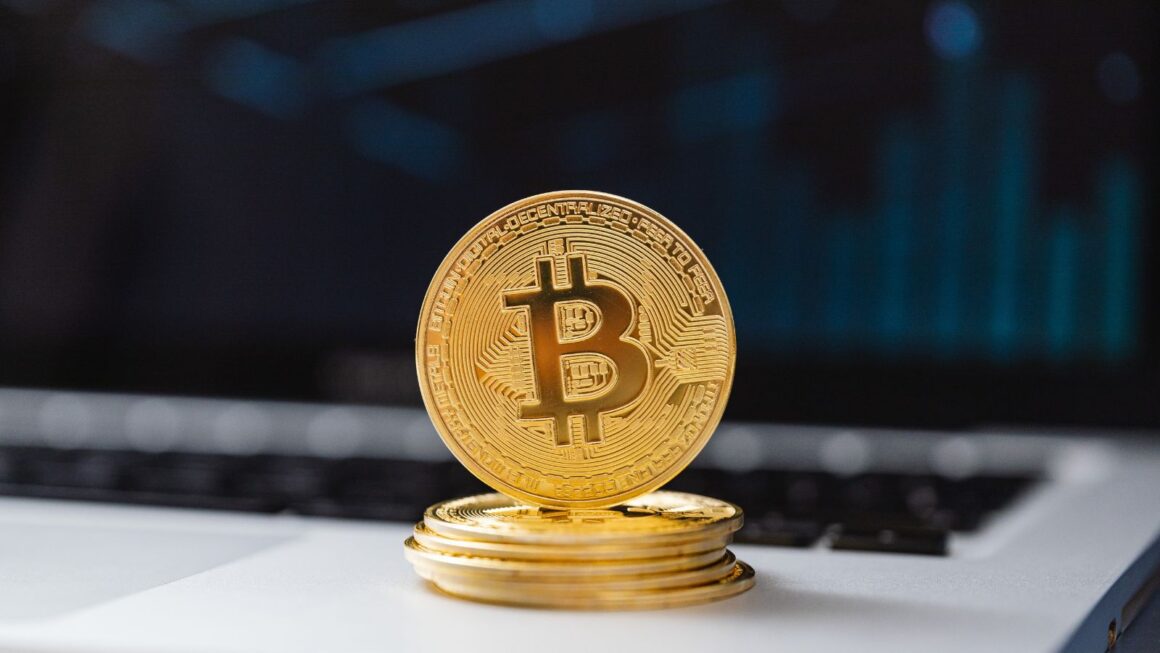
Bitcoin was the first cryptocurrency, and since its debut in 2009, it has attracted a significant amount of attention. Many experts will argue that the reason so many investors turned to BTC in the past involved its highly liquid nature. The price of Bitcoin has enjoyed several meteoric rises, and a handful of astute traders literally became millionaires overnight. As Bitcoin is also the largest cryptocurrency in relation to its market cap, it also serves as a means to keep an eye on the larger crypto ecosystem. This status is not likely to change any time soon, so investors should continue clamouring for holdings in BTC.
Moving on, it should also be mentioned that Bitcoin has been known for perform independently from traditional stocks and shares. While this has caused some to embrace more cautious strategies, others appreciate the fact that BTC can represent yet another way to create a more diversified portfolio. In the event that another asset fails to perform, it may be possible to liquidate one’s BTC holdings so that the aggregate value of a portfolio remains relatively stable.
Interestingly enough, much like silver, Bitcoin is seen as a means to stave off inflation. This arises from the fact that there is only a limited supply of BTC that will ever be released (21 million coins). When other currencies become devalued, traders may turn to BTC to recuperate potential losses. Some have even been known to call Bitcoin “digital gold” when discussing its relationship with fiat currencies such as the dollar, the euro, the pound, and the Japanese yen.
One of the most recent traits of Bitcoin that has attracted the attention of investors involves its real-world applications. BTC is no longer a unique investment opportunity. Similar to other stablecoins (such as Litecoin, Ethereum, and Tether), it is now possible for consumers to perform everyday transactions with this cryptocurrency. A growing number of retailers are accepting crypto payments, and the casino sector is a great example. Whether referring to placing a Bitcoin gamble on the outcome of a sports competition, or using this digital currency to play virtual slots, casinos fully realise the potential of BTC as an alternative transaction method.
A final trait unique of Bitcoin (and indeed all cryptocurrencies) involves the anonymous and transparent design of the blockchain. While not necessarily a technical trading indicator, this sense of security caters to the psychological side of investors. This especially applies to individuals who have lost faith in governmental organisations (such as central banks), or who wish to keep big brother at bay.
Bitcoin Versus Silver: What Happened in 2025?
Now that we have examined the relative strengths of both assets, it will be much easier to discuss why silver outperformed Bitcoin throughout the majority of 2025. Not that there is no single reason, but rather, a combination of factors that ultimately caused silver to retain its lustre. Let’s jump right in.
The Concept of “Debasing Trade”
Some analysts have referred to 2025 as the year of the debased trade. What does this exactly mean? We need to refer back to the role of inflation that was highlighted earlier. Traders who feel that the value of fiat currencies will soon become debased are likely to shift their capital into other assets viewed as a means to hedge against such a scenario (2). This is “debased trade” in a nutshell. Precious metals have always presented useful assets to embrace. However, it was clear that Bitcoin did not respond in a similar manner throughout 2025. This is likely due to its inherently volatile underpinnings. While BTC can be seen as a way to counteract currency debasement, rapid price changes simply made investors look elsewhere.
The Lurking Role of the United States Dollar
We have already seen that silver shares a direct relationship with the value of the United States dollar. This became particularly important during 2025 for two primary reasons:
- The anticipation of interest rate adjustments was thought to limit yields.
- A poorly performing dollar cause more investors to purchase silver at comparatively lower prices.
These are the two factors which served to increase the attractiveness of silver assets; especially silver ETFs. Although it could be argued that Bitcoin may have performed similarly, we need to remember that (notwithstanding the American marketplace), Bitcoin ETFs are not available to the investment community.
Physical Versus Theoretic
The industrial demand for silver continued to surge in 2025 due to increased global manufacturing output. This provided the tangible proof needed for investors to consider entering into silver trades. Furthermore, analysts predict that this demand will continue rising well into the foreseeable future.
The problem here is that the value of Bitcoin is partially speculative in nature. While prices are indeed determined by supply and demand (such as Bitcoin halving events), they can just as easily be driven by public sentiment, and even on nothing more than rumours. During periods of economic instability, this makes it much less likely that conservative investors will decide to become actively involved. The physicality of silver provides a much-needed edge, and one that trumped the short-term potential of BTC in 2025.
Ongoing Regulatory Concerns
To be clear, the cryptocurrency community gained ground in 2025 when referring to governmental recognition of its upside potential. Easing regulations combined with more transparent stablecoin legislation (especially in the United States) proved to be advantageous for many cryptocurrencies. Still, these did little to stave off their volatile nature. For instance, Bitcoin experienced a rally to rise slightly above $126,000 dollars before ending the year at $90,000 dollars per coin (3). To put it simply, investors are still not convinced that BTC can be used as a stable hedge when macroeconomics begin to flirt with bearish territory.
Silver does not suffer from these issues. This metal has been traded for thousands of years, and thorough legislation is already in place. Not only does this make it much easier to include as an investment opportunity, but it also signifies that finding a buyer is easy. There have been times when selling Bitcoin was not as straightforward, as many cryptocurrency traders feared that the markets would fall further before recovering.
A Market Divergence that Spooked Traders
A final reason why silver performed so well in 2025 involves its perceived relationship with Bitcoin. Many investors previously felt that rallies associated with precious metals would be reflected (to a degree) in the prices of major stablecoins. However, the exact opposite came to pass. Although silver and gold rallied throughout 2025, the cost of BTC fell from a longitudinal perspective. This forced analysts to reevaluate their perspectives. They began to view Bitcoin as an asset that was particularly sensitive to volatility, and as less of a safe haven.
What Might Come to Pass in 2026?
This is the question that everyone has been asking since the end of 2025. Will 2026 witness a rebound in the price of BTC, and might it even test new levels? How will these compare to the performance of silver?
While the verdict is still out, it is already a foregone conclusion that silver will continue to maintain its vaunted status as a safe haven. Assuming that industrial output continues at its current pace, it is also likely that the price of silver per ounce will look favourably on the investment community.
The future of Bitcoin is much less clear. A handful of factors could cause the price to swing in either direction. Here are some mitigating variables to consider:
- The role of industry regulation
- Macroeconomic factors such as geopolitics
- Inflationary figures
- Investor sentiment
- The performance of other stablecoins
However, these do not necessarily signify that the cryptocurrency markets are slated to enter a period of prolonged stagnation. Investors are still keen to leverage the short- and medium-term potential of assets such as Bitcoin.
Perhaps the main takeaway point here is that the relationship between Bitcoin and silver is much more nuanced than previously thought. Gauging one against the other might not provide the insight that analysts have been looking for. Regardless of the outcome, there is no doubt that 2026 will be an interesting year for cryptocurrency investors, and fans of precious metals.