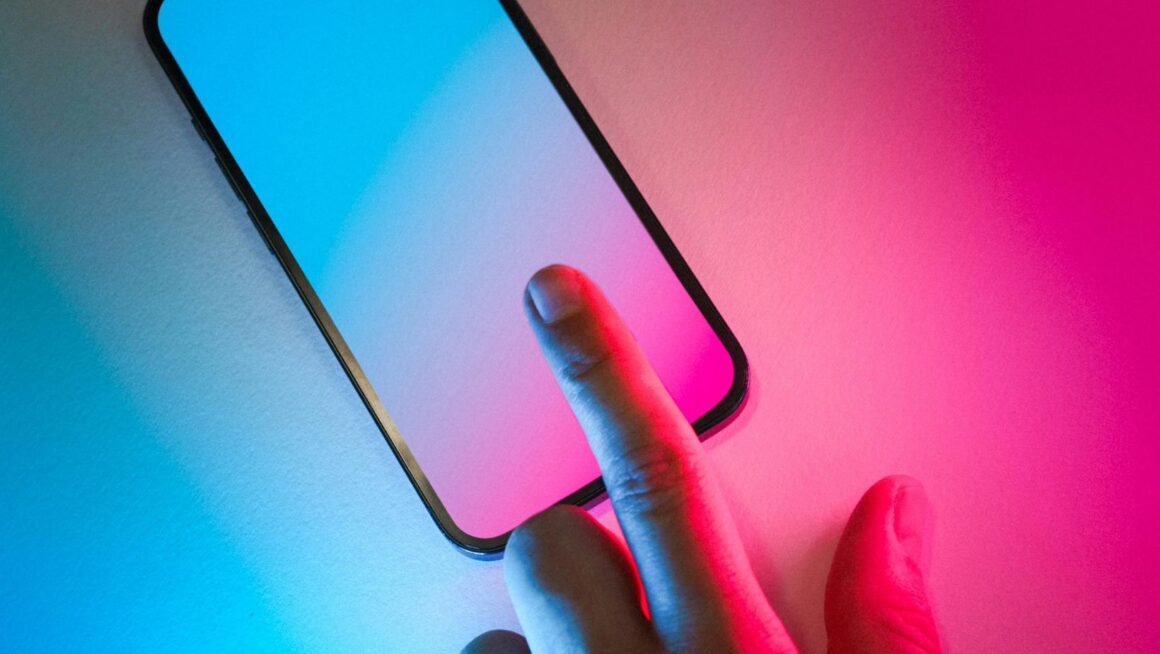
Have you ever wished you could reach out and touch the digital world? Not just swipe it, but actually feel it. The texture of a woven blanket in an online store. The satisfying click of a button on your screen, or the crispy, salty crunch of a potato chip.
For years, this was the stuff of science fiction, as our smartphones have been silent, glassy slabs, but that is changing. Right now, a revolution is happening in the palm of your hand called haptic tech, and it’s learning to mimic the feel of real things. Imagine scrolling through a menu and feeling the bump of each selection. Imagine playing a game and sensing the recoil of a virtual gun. But the holy grail? Convincing your brain that the smooth glass under your finger is actually a stack of greasy, delicious potato chips.
This has transformed how we interact with everything digital. It’s about adding a sense we never knew we were missing. Welcome to the haptic revolution, one that will soon reach all our favourite games at https://www.playamo.com/en-CA/games/slots.
It’s All in the Vibration (But Way Smarter)
So, how does a piece of glass trick your brain into feeling a chip? It’s a sophisticated dance of physics and psychology. Your phone already vibrates. You feel a buzz for a notification. But that’s a simple, one-note jolt. It’s the digital equivalent of a shout. New haptics are more like a whisper. Or a symphony.
Instead of a simple motor spinning, modern devices use linear resonant actuators. These create precise, rapid movements. They can start and stop in an instant. This allows developers to shape the vibration. They can make a sharp, short “pop.” Or a long, smooth “pull.” They can even combine them.
To mimic the feel of biting into a chip, they do something clever. As your finger swipes across a “bag of chips” on the screen, the haptic engine fires off a series of these pops. It’s a rapid-fire staccato. Pop. Pop. Pop-pop-pop. Crunch.
The Brain Game: Sensory Illusions
Your brain is a wonderful pattern-finding machine and takes these vibrations and combines them with what you see. You see the chip shatter on the screen. You hear the satisfying crunch from the speaker. And then you feel a chaotic burst of tiny vibrations. Your brain connects the dots. It says, “That feels like a chip breaking.” It’s a sensory illusion, and it’s the same principle that lets a movie theater rumble make you feel like you’re in an earthquake. The tech is creating a digital texture out of thin air.
More Than Just Snacks: The Real-World Magic
Although modeling virtual chips provides an intriguing proof-of-concept (a captivating demonstration that sparks creativity), the ramifications of this technology reach well beyond such fanciful uses. We stand at the edge of a profound transformation in human-computer interaction… one that holds the promise of infusing our virtual experiences with a new sense of tactility and, consequently, greater humanity.
Many users harbor a certain nostalgia for the positive tactile feedback and satisfying acoustic signature of a physical keyboard. Advanced haptics are poised to not only replicate but also revolutionize this experience. The “feel” of their input methods can be curated by users. While some individuals may favor the soft, compliant resistance of a membrane keyboard, others may choose the definitive, forceful response of a mechanical switch with its distinct “click” noise. Thus, the glass surface of a device that was once inert is transformed. It acquires a distinctive and customizable personality that responds directly to the user’s touch.
Or consider accessibility. For the visually impaired, this is a game-changer. Imagine feeling the shape of a button before you press it. Imagine “feeling” your way through a map. Imagine receiving a text message encoded as a specific vibration pattern on your wrist. You could “feel” who is calling without looking. This adds a layer of communication that is purely tactile. It’s a silent, private language between you and your device.
Designing for the Hand, Not Just the Eye
This shift is also changing how we design apps, as for years, designers only worried about how things looked. Now, they have to think about how things feel. It’s a whole new design language.
A designer can now make a slider feel notched. You can feel it click into place as you adjust the volume. A toggle switch can feel like a real, physical one, and you get that satisfying thunk as it flips. A notification can be a gentle tap on the shoulder instead of a jarring alarm.