
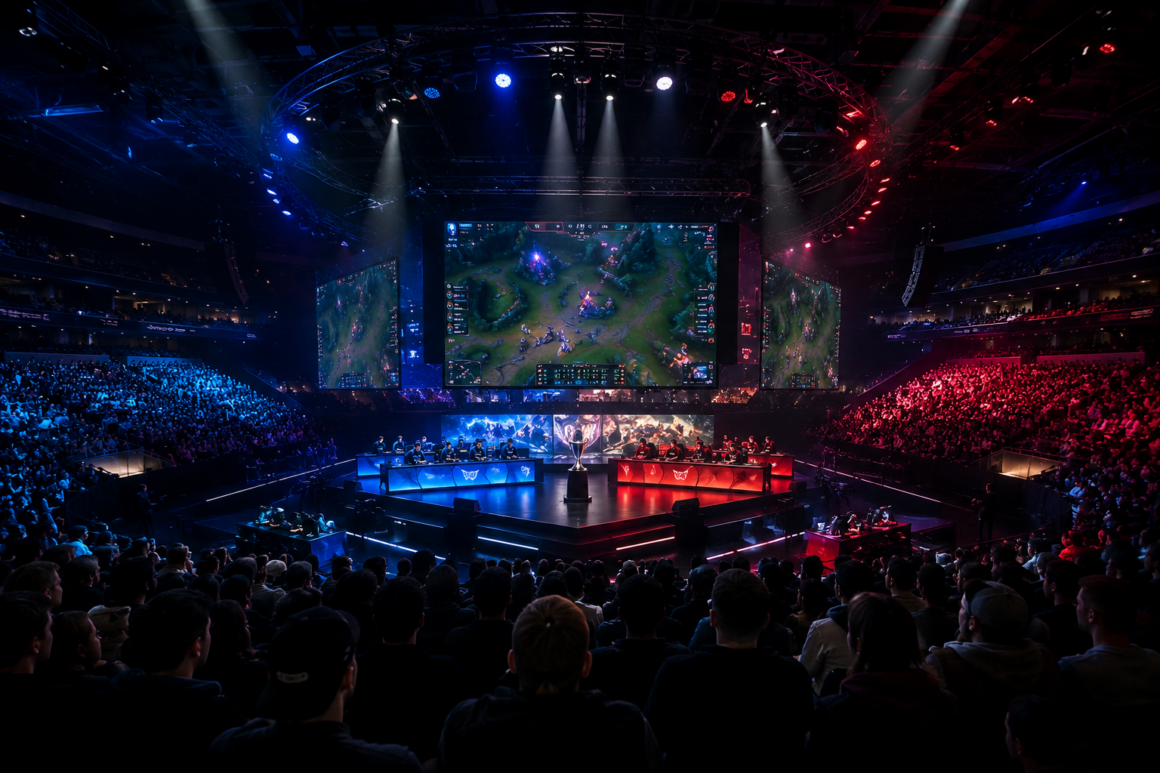
What Is an Esports Tournament?
An esports tournament is organised competition where pro players or teams fight through a single video game for prize money, ranking points, and a trophy. Counter-Strike 2, Dota 2, League of Legends, Valorant. Their marquee events fill arenas and pay out pools past eight figures.
Follow the brackets closely and that knowledge starts paying off the second you back a side. 1Red’s esports section runs esport betting bonuses tied to live events like the CS Majors and the League of Legends World Championship, so you wager on form you actually read rather than a hunch.
The Structure of Competitive Esports
Most scenes run on a season, not a one-off. The competitive year stacks in layers: anyone can enter at the bottom, only a handful reach the stage at the top.
Qualifiers and Open Competitions
Open qualifiers are the front door. Amateur and semi-pro squads grind through online brackets — sometimes hundreds of them — chasing a single slot against established orgs.
Regular Seasons and Leagues
Franchised leagues like the LEC and LCK run weeks of scheduled matches. Teams bank points across the split; consistency matters more than one hot night.
Playoffs and Final Stages
The top seeds advance to playoffs, usually a bracket on a LAN stage in front of a live crowd. Stakes spike. One bad map can end a season months in the making.
Common Esports Tournament Formats
Format decides how forgiving the road is. Some punish a single slip; others let you stumble and climb back. The four common ones stack up like this.
|
Format |
How it works |
Where you’ll see it |
|
Single-elimination |
Lose once, you’re out |
Knockout finals |
|
Double-elimination |
A loss drops you to the lower bracket |
The International, CS playoffs |
|
Round-robin |
Everyone plays everyone |
Group stages, leagues |
|
Swiss |
Paired by record until a cutoff |
CS Major opening stages |
Single-Elimination Brackets
Cleanest to follow, harshest to play. One loss ends your run, which is precisely why grand finals lean on it — every round carries maximum tension.
Double-Elimination Brackets
Drop a series in the upper bracket and you fall to the lower one, bruised but breathing. A squad can lose early and still lift the trophy.
Round-Robin Competitions
Everyone faces everyone, so a single off day won’t sink you. It’s the truest read on who’s strongest, and it seeds whatever stage comes next.
Swiss System Formats
Swiss pairs teams on matching records — winners meet winners, losers meet losers — and you advance or exit at a set number of each. It trims a huge field fast. Valve’s Majors made it standard.
How Esports Teams Are Organized
A roster is only the visible part. Behind the players sits a staff that treats the game as the profession it has become.
Player Roles and Team Composition
Every title splits its lineup into specialised jobs. CS2 fields an in-game leader calling strategy, an AWPer holding angles, entry fraggers taking first contact, and support trading utility. Drafting games like Dota assign lanes and positions instead.
Coaches, Analysts, and Support Staff
Coaches own strategy, drafts, and the headspace between maps. Analysts comb opponent demos for tendencies players miss mid-game. The biggest orgs add psychologists and managers on top.
Team Recruitment and Development
Talent gets scouted from open ladders, academy rosters, and breakout qualifier runs. Promising players climb tiered systems before they ever reach a main stage. Transfers and buyouts now echo football’s market more than anyone predicted a decade ago.
Understanding Major Esports Championships
A few events tower over the rest — the ones players build careers around. These marquee titles are where Esports Betting at 1Red sees its heaviest action, because the fields are stacked and every map swings the bracket.
-
The International — Dota 2’s showpiece, famous for crowd-funded pools past $40 million.
-
League of Legends World Championship — Riot’s global final, pulling tens of millions of concurrent viewers.
-
CS Majors — Counter-Strike’s Valve-sponsored peaks, the sport’s most coveted trophies.
-
Valorant Champions — the season-ending climax of Riot’s fast-rising tactical scene.
How Fans Follow Esports Tournaments
Watching esports is a skill of its own. The scene grew up online, so the tools beat what most traditional sports offer.
Live Streams and Broadcast Platforms
Twitch and YouTube carry nearly every event for free, often with multiple language casts and co-streamers reacting live. Big finals reach TV deals and stadium screens too.
Match Statistics and Analysis
Live overlays surface economy, win probability, and round history as a game unfolds. For 1Red esports betting, those numbers are how sharp fans spot value before the odds adjust.
Community Engagement and Fan Experiences
Fans don’t just watch. They vote in polls, buy team skins, flood chat, and pack arenas for finals — and Pick’em predictions turn a passive stream into something they’ve staked a claim on.
The Challenges of Organizing Large Esports Events
Running a major is a logistical beast. Organisers juggle near-zero-latency LAN setups, anti-cheat oversight, broadcast production that rivals a TV studio, and travel for teams flying in from four continents. A mid-event patch can quietly reshape the meta overnight. One server hiccup on a grand-final map becomes the headline.
The Future of Esports Competitions
The trajectory points up. Mobile titles are drawing vast audiences across Asia, prize pools keep swelling, and franchise models are nudging the scene toward the stability traditional leagues took decades to reach. Expect tighter ties with mainstream sports media and more cities bidding to host. The gap between esports and sports narrows every season.
Frequently Asked Questions
What is the most common esports tournament format?
Double-elimination dominates premier events because it balances fairness with drama — a strong team that slips early still has a path back. Group stages usually rely on round-robin or Swiss to trim the field first.
How do teams qualify for major championships?
Most reach them through a blend of league standings, circuit points banked over a season, and open or regional qualifiers that award the final slots to whoever wins their way in.
Which esports have the biggest prize pools?
Dota 2’s The International has long led the pack thanks to crowd-funding, with several editions clearing $30-40 million. League of Legends and Counter-Strike also run multi-million-dollar pools.
Can you bet on esports tournaments?
Yes. Licensed sportsbooks cover match winners, map handicaps, and live in-play markets across the major titles — stick to regulated operators and treat it as entertainment.