Foam vs rubber terabytelabs the truth appears in many search queries about camping sleep pads. This guide shows clear differences and real outcomes. It names performance factors and user concerns. It helps buyers decide which pad fits their needs. It avoids hype and states facts people can check.
Key Takeaways
- Foam and rubber pads differ significantly in material and feel, with foam offering firmer, consistent support and rubber providing springier, dynamic comfort.
- Foam insulation traps less heat, making it cooler on warm nights, while rubber insulates better in cold conditions but can feel warmer against the body.
- Foam pads generally weigh less, dry faster, and resist punctures through dense cells, whereas rubber pads may be heavier and need careful valve maintenance to avoid leaks.
- Foam pads are more budget-friendly and easier to repair for tears, while rubber pads cost more due to complex valves and require vulcanizing patch kits for fixes.
- Allergy considerations favor foam for those sensitive to latex, and new pads of either type should be aired out to reduce odors before use.
- Choosing between foam vs rubber terabytelabs depends on personal needs related to support style, temperature control, portability, allergy risks, and repair options.
How Foam And Rubber Differ: Materials, Feel, And Durability
Foam vs rubber terabytelabs the truth starts with material. Foam uses closed-cell or open-cell polyurethane. Rubber uses natural or synthetic elastomer. Foam feels firmer under light pressure. Rubber feels springier and more elastic. Foam compresses slowly under long use. Rubber returns shape faster after load. Foam traps less heat than some dense rubber cores. Rubber often insulates better in cold air because air pockets form inside the elastomer. Foam resists punctures when it uses dense cells. Rubber resists abrasion when it uses thick outer layers. Foam weight stays low when manufacturers fuse thin layers. Rubber weight rises with thicker compounds and valves. Foam pads often sell at lower prices than rubber pads. Rubber pads often cost more because of compound and valve complexity. Foam offers consistent support for side sleepers and back sleepers at varied firmness levels. Rubber provides dynamic support for people who shift weight during sleep. Foam retains small tears without immediate failure. Rubber can fail catastrophically if a seam or valve breaks. Foam pads dry faster after wetting because foam sheds water from the surface. Rubber pads need full inflation and air drying to clear moisture inside folds. Foam vs rubber terabytelabs the truth shows that material choice changes feel, weight, thermal behavior, and puncture response.
Performance Comparison: Support, Temperature, Noise, And Real-World Longevity
Foam vs rubber terabytelabs the truth becomes clear in test conditions. Foam delivers steady support for people who stay mostly still. Rubber delivers adaptive support for people who move a lot. Foam insulates with trapped air in the foam cells. Rubber insulates with chambered air and compound thickness. Foam holds less heat against the body on warm nights. Rubber can feel warmer when it traps body heat against a smooth surface. Foam produces almost no mechanical noise when the sleeper shifts. Rubber may creak around valves or seams when the user moves. Foam shows wear as compression lines and slow flattening. Rubber shows wear as surface scuffs, valve leaks, or seam stress. Foam resists common campsite sharp objects when it uses high-density cores. Rubber resists punctures by spreading loads across the compound. Foam pads often keep support after heavy compression cycles. Rubber pads often need valve repair or patching after puncture. Foam needs little maintenance beyond drying and occasional cleaning. Rubber needs valve checks and periodic soap testing for leaks. Foam packs easier when designers make it foldable or layered. Rubber packs tighter when it deflates fully and rolls. Foam vs rubber terabytelabs the truth appears again when reviewers test long-term camping use. Foam tends to keep a predictable feel over seasons. Rubber can change feel as compounds age and as oils in the rubber migrate. The buyer should expect different trade-offs in support, temperature control, noise, and longevity depending on the chosen material.
Real-World Tests, Allergy Considerations, And Which Option To Choose
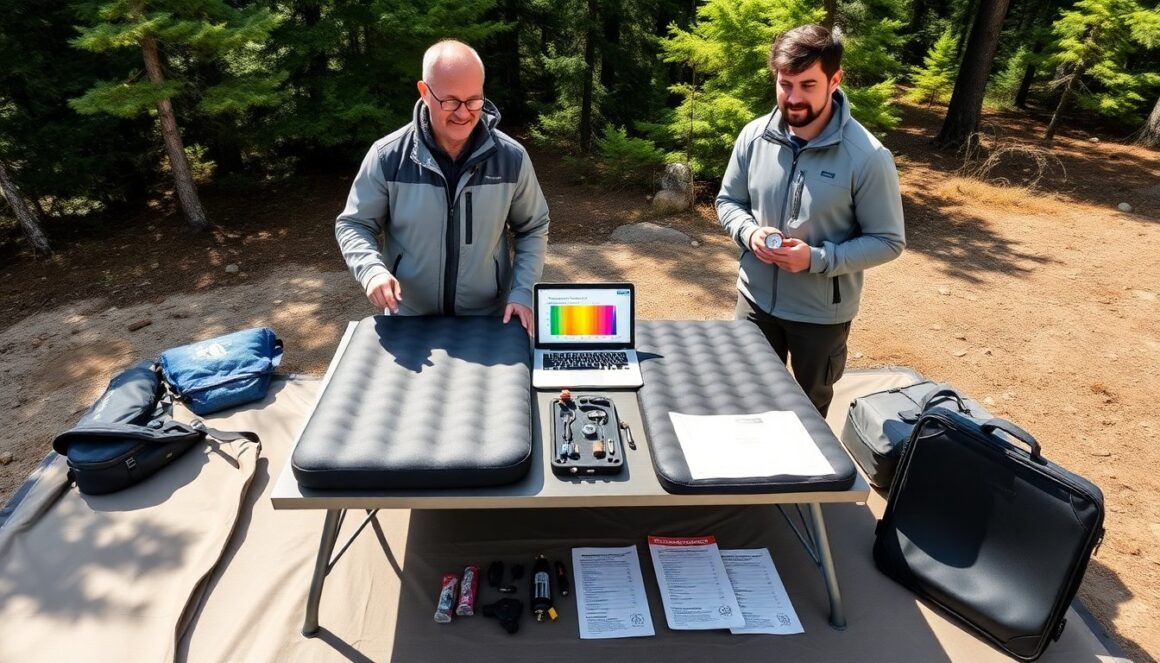
Foam vs rubber terabytelabs the truth becomes personal in field tests. Testers set pads on wet ground, cold nights, and hard rocks. Foam kept consistent comfort on hard ground in most tests. Rubber provided extra bounce that some testers liked for shoulder relief. Testers measured surface temperature with contact sensors. Foam stayed cooler on warm nights. Rubber warmed faster under direct body contact. Testers dropped weight repeatedly to simulate long trips. Foam showed gradual compression. Rubber showed occasional valve leakage in one test group. Allergy cases vary by compound. Some people react to natural rubber latex. Manufacturers sometimes add latex warnings for rubber pads. Foam rarely carries latex allergens unless the foam uses latex binders. People with latex allergy should choose foam or check product chemical specs. Odor can affect sleep. New rubber pads can emit a rubber smell for days. Foam pads can give off a light chemical odor that fades faster with air outgassing. Buyers should air new pads outdoors before use to reduce smell. Repair matters in the field. Foam repairs require surface adhesive and patching for tears. Rubber repairs need vulcanizing patch kits or tube patch materials. Buyers should carry a small repair kit matched to the pad type. Portability will affect the decision. Foam wins where pack volume and light weight matter. Rubber wins where dynamic support and on-site comfort matter. Cost also shapes choice. Foam generally costs less for similar coverage. Rubber often costs more for high-end inflation systems and valves. Foam vs rubber terabytelabs the truth shows no single best option. The buyer should weigh allergy risk, pack size, thermal needs, and repair options when choosing.