
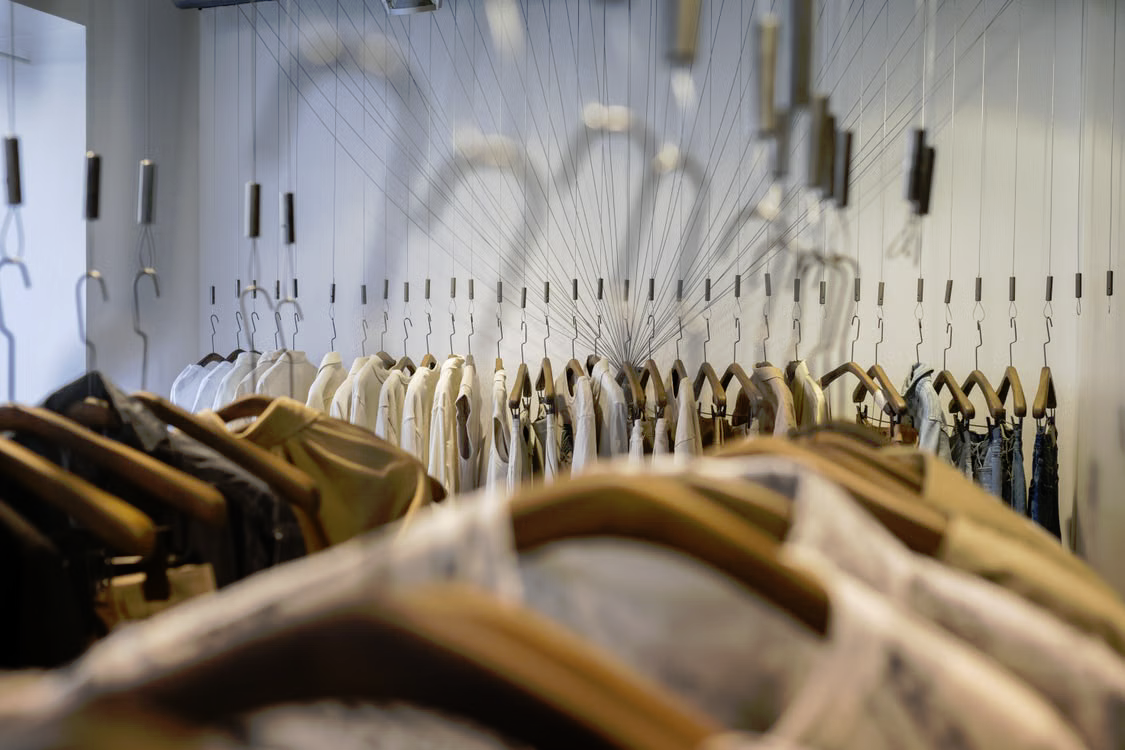
As many as 60 billion garments go unsold each year, with a large proportion of this total damaged after arriving at regional distribution hubs and thus rendered unfit for retail. When high-end suits, delicate dresses, or structured outerwear sit folded in flat-pack boxes, warehouse teams spend hours unpacking, sorting, and steaming items before they ever reach a sales floor or customer doorstep. Moving apparel on hangers instead of in boxes removes those extra touches from the moment a trailer backs up to the receiving dock.
Modern logistics operations rely on overhead rails, trolley conveyors, and vertical racking to keep inventory suspended from factory floor to retail rack. By eliminating corrugated packaging and manual folding steps, garments-on-hangers transport streamlines fashion supply chains while cutting down on wrinkled stock and damaged fabrics. For warehouse managers dealing with tight seasonal turnarounds, that immediate readiness translates into faster dock-to-stock times and fewer labor hours wasted on garment preparation.

Eliminating Repacking and Pressing Bottlenecks
Flat-pack apparel shipping creates a hidden labor tax at every stage of the warehouse workflow. Workers must slice open boxes, remove plastic polybags, hang each piece individually, and run wrinkled items through commercial steam tunnels before order picking can even begin.
Integrating garment-on-hanger storage systems allows facilities to receive, store, and pick inventory in a single continuous state. Instead of breaking down pallets and re-hanging merchandise, operators transfer suspended batches directly from delivery trucks onto overhead warehouse rails. This direct transfer removes multiple handling points where items typically get misplaced, creased, or mislabeled.
When an order drops into the warehouse management system, suspended inventory moves straight toward packing or shipping lanes without detours through refurbishment stations. GOH fulfillment preserves garment integrity while accelerating throughput during peak retail seasons. Less manual touch per unit means fulfillment teams process higher daily order volumes with the exact same headcount.
High-Density Vertical Storage and Automated Routing
Floor space is often the biggest constraint in urban and regional retail locations. Standard shelving wastes vertical cubic footage and forces pickers to walk long aisles to assemble multi-item orders.
Overhead trolley setups and multi-tier mezzanines maximize ceiling height while keeping every SKU visible and accessible. Modern facilities pair these rails with automated sorting technology to route individual hangers directly to designated packing stations. Advanced automated hanging garment systems use adapter technology to sequence orders by size, color, or store destination without human intervention.
To see how suspended layouts outperform traditional boxed shelving, consider the core operational shifts inside a hanging warehouse:
- Overhead rail networks utilize unused vertical ceiling space to increase overall storage density without expanding the building footprint
- Automated trolley routing delivers exact SKU sequences directly to packers and eliminates long picker travel times across warehouse aisles
- Continuous barcode and RFID scanning along the rail tracks every garment in real time to prevent inventory shrinkage and picking errors
This is also about sustainability; something that can be achieved and amplified in various ways, including using AI. Improving storage solutions in retail reduces waste, which in turn improves the industry’s reputation.
Faster Cross-Docking for Retail and Omnichannel Orders
Speed at the outbound dock matters just as much as receiving efficiency, especially when supplying brick-and-mortar stores alongside direct-to-consumer channels. Retail store associates need shipments that can roll straight from the delivery truck onto the showroom floor.
Because hanging garments arrive pre-sorted by store section or order wave, loading outbound trailers becomes a quick roll-on process rather than a heavy lifting exercise. Store staff avoid hours of backroom unboxing, which puts fresh seasonal collections in front of shoppers days earlier. For more on a range of business topics and consumer talking points, read our other posts on the latest innovations.