Technology is fundamentally changing how we perceive reality on screen by merging real-time data with tangible physical elements in the $25 billion VFX industry. Specifically, more funds are allocated to complex simulation effects, such as fire, smoke, and atmospheric depth, each year.
This shift matters because modern audiences can spot a purely digital “faked” environment from a mile away. To keep viewers immersed, studios are moving away from the sterile look of early CGI toward a hybrid model in which digital tools and physical hardware work in perfect synchronization.
The era of waiting months to see a finished shot is effectively over. With the rise of real-time rendering and GPU-integrated AI, directors can now see high-fidelity previews of their digital worlds while they are still standing on the physical set.
This instant feedback loop allows for creative pivots that were previously too expensive or time-consuming to attempt. By bridging the gap between the virtual and the physical, technology has turned the post-production phase into a live collaborative process.
The Synergy Of Hardware and Real-Time Processing
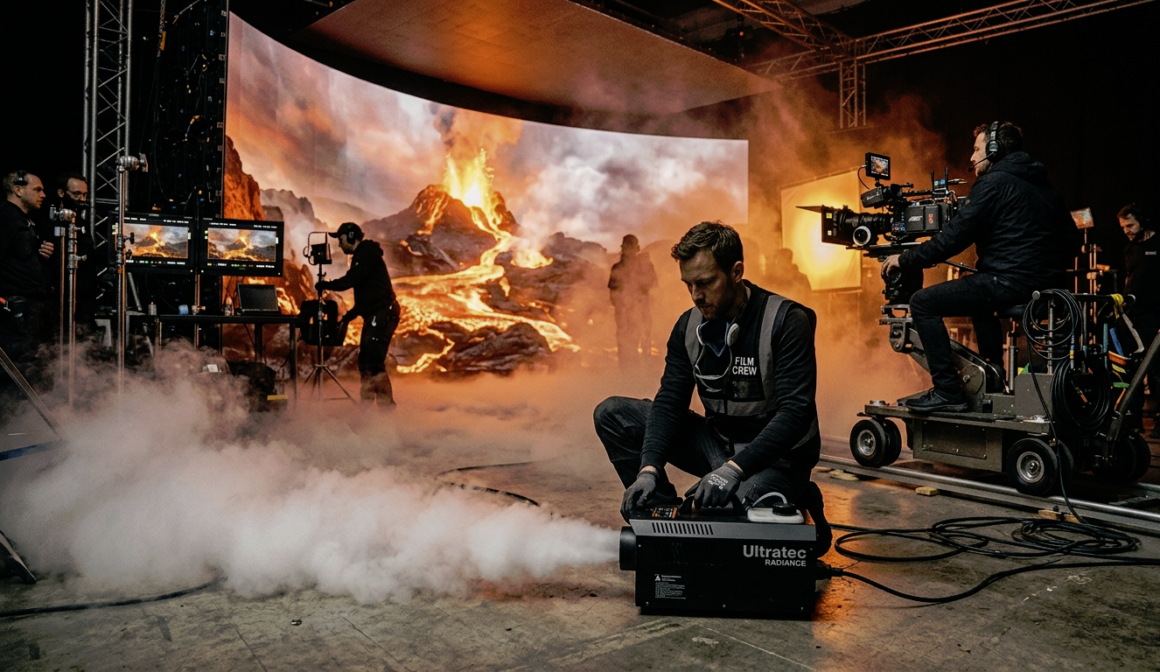
Virtual production has evolved far beyond simple green screens, now including massive LED volumes that display digital landscapes in real time. These screens do not just provide a backdrop; they serve as the primary light source for the actors, ensuring that the digital sunset on the screen accurately reflects on the performers’ skin. However, the light from a screen cannot replicate the tactile nature of a physical environment, which is where specialized onset hardware becomes a necessity.
While digital artists handle the pixels, a studio like Surge FX provides the essential physical atmosphere through fog machines and precision lighting rigs, grounding those digital images in reality. When a digital dragon breathes fire on an LED wall, you still need physical haze and flicker-sync lighting on the stage to make the interaction feel visceral. This combination of high-tech software and rugged physical hardware creates a seamless visual experience that defies the “uncanny valley” effect.
Modern workflows rely on several key technological pillars to maintain this level of quality:
These advancements have democratized high-end production, allowing smaller teams to achieve results that once required the budget of a major motion picture studio.
Neural Networks And The Automation Of Tedium
Artificial intelligence is not replacing the artist; it is replacing the “click-work” that traditionally burned through VFX budgets. New AI agents are now streamlining global studio workflows by handling the organizational nightmare of tracking thousands of individual digital assets across different time zones, improving productivity by up to 10%. Instead of an artist spending three days manually tracing the outline of a moving actor, neural networks can now perform that task in minutes with sub-pixel accuracy.
This automation frees up the creative team to focus on the artistry of the shot rather than the mechanics of the software. We are seeing a massive surge in AI-driven 3D generation and markerless motion capture, enabling more natural movement in digital characters without the need for cumbersome suits or ping-pong ball sensors
By removing the technical barriers to entry, technology is allowing for more diverse storytelling and more ambitious visual concepts. And AI applies beyond VFX, with uptake in everything from language learning to cybersecurity, so its flexibility deserves celebration.
Scaling Creativity Through Cloud Infrastructure
The backbone of this entire transformation is the cloud. Since the rendering requirements for 8K and 12K footage are exponential, local server farms are becoming a thing of the past for many mid-sized studios. Digital artists now leverage distributed cloud rendering to tap into massive amounts of processing power on demand, ensuring that complex liquid simulations or hair groom renders do not bottleneck the entire production pipeline.
This connectivity means a lighting lead in London can work on the same scene as an animator in Vancouver in real time. The latency issues that once plagued remote work have been solved by high-bandwidth pipelines and hardware-accelerated streaming. As we look toward the future, the distinction between “on-set” and “post-production” will continue to blur until they are simply two different lenses on the same creative spark.
Mastering The Atmosphere Of Modern Film
The future of visual effects lies in the perfect marriage of the invisible and the tangible. As digital tools become more powerful, the need for high-quality physical effects hardware only grows, as these elements provide the “organic noise” that makes a digital image feel like a photograph. Achieving this balance requires a deep understanding of both the software and mechanical sides of the industry.
If you are interested in more coverage of the latest tech trends and how they apply to various industry niches, stick around and read more of our posts.