
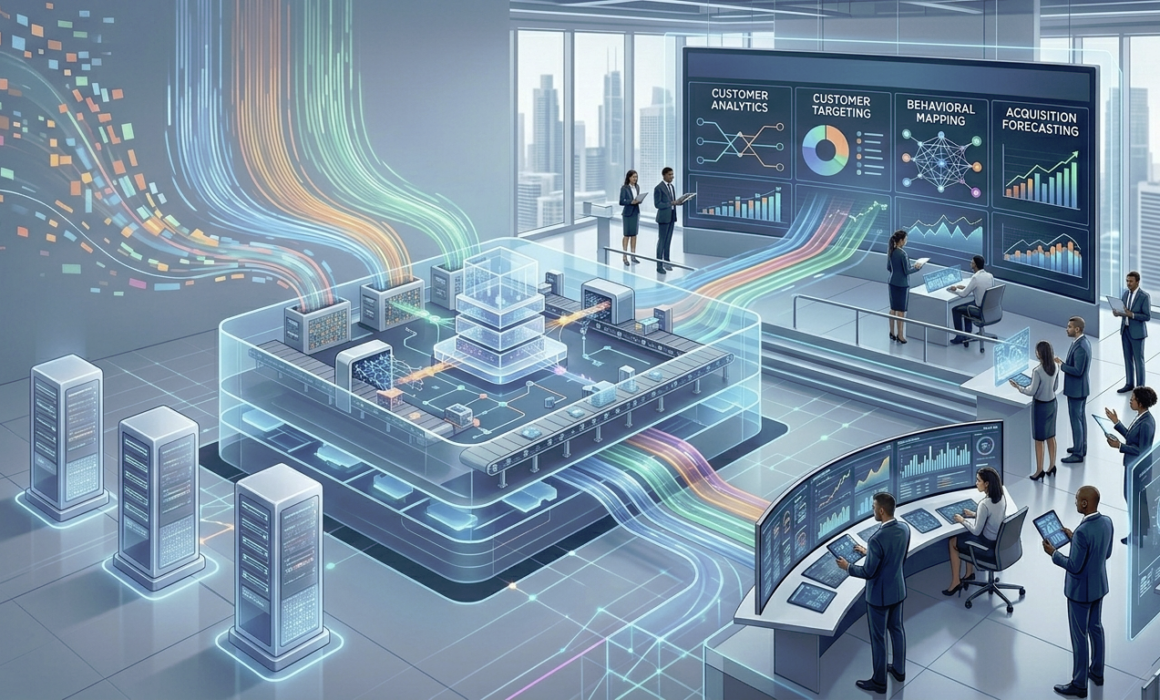
Modern enterprise teams generate millions of data points every single day across isolated software systems. For decades, businesses treated data collection like a digital attic, stacking unorganized information into storage silos and hoping it might become useful later. That passive approach is no longer sustainable.
The Reality of Fragmented Modern Enterprise Data
Corporate leaders are aggressively shifting budgets away from passive storage toward active analytical frameworks. Executives are discovering that simply having data means nothing if teams spend half their workweek arguing over which spreadsheet contains the correct numbers. Siloed metrics slow down product development, cause marketing teams to target the wrong demographics, and turn strategic forecasting into little more than guesswork.
This operational friction explains why the global data analytics sector is moving toward $104.39 billion in 2026 as real-time analytics and data mining take priority over traditional backward-looking reporting. Organizations are trading manual data extraction for centralized systems that instantly synthesize complex operational inputs. This foundational shift eliminates fragmented decision-making, allowing teams to align behind a single verified source of truth rather than relying on gut feelings.
Why Machine Learning and Automation Reshape Operations
The rise of massive cloud infrastructure has made sophisticated analytics accessible to everyday operations. In earlier technical eras, running advanced data modeling required an army of specialized data scientists and expensive, on-premise mainframe setups. Today, automated cloud-based intelligence applications run continuously in the background, cleaning datasets and identifying underlying market anomalies without requiring human intervention.
This automation allows businesses to instantly pivot when market conditions change. For example, enterprise logistics networks use these tools to predict supply chain bottlenecks weeks in advance, while financial institutions rely on them to flag anomalous transaction patterns within milliseconds. Because these platforms run continuously, they convert raw operational information into immediate tactical advantages.
Organizations increasingly rely on specialized data intelligence platforms to improve data quality, compliance, and record accuracy across complex operational environments. This is especially important in pension and benefits administration, where organizations must maintain accurate participant records, verify identities, locate missing beneficiaries, and support regulatory compliance initiatives. The ABL Tech pension data intelligence platform helps organizations strengthen these verification processes through data-driven research, validation workflows, and centralized reporting capabilities that improve confidence in critical decision-making.
Shifting Focus From Data Collection to Data Quality
As organizations expand their digital footprints, the actual challenge shifts from gathering vast volumes of information to ensuring that information is accurate, structured, and compliant. Feeding inaccurate or redundant information into an automated analytical engine will only generate flawed business insights at a faster rate. This reality forces a major strategic pivot in corporate IT departments.
Enterprise engineering teams are actively shifting their day-to-day priorities away from simply building massive pipelines to capture information. Instead, they are focusing heavily on verification, observability, and data quality assurance.
Modern data intelligence platforms solve the trust problem through automated validation rules:
- Centralized governance systems automatically scrub duplicate user profiles from CRM databases
- Schema monitoring tools instantly alert engineers when incoming database structures break compatibility
- Anonymization protocols mask sensitive customer details to maintain strict compliance with global privacy mandates
Maintaining this level of structural integrity ensures that machine learning algorithms generate reliable strategic forecasts. When corporate executives completely trust the underlying data infrastructure, they can make major operational investments with absolute confidence.
How Centralized Analytics Accelerates Strategic Forecasting
Traditional corporate forecasting relied heavily on historical performance patterns, often leaving organizations unprepared for sudden macroeconomic shifts. Modern data intelligence platforms address this limitation by combining internal operational metrics with external, real-world variables. This synthesis enables finance and operations teams to run highly complex simulations that test how shifts in consumer demand or supply chain disruptions will affect revenue.
The business value of this proactive approach is visible across global industries. Recent research from Deloitte shows that 53% of organizations report using intelligent data systems specifically to enhance their corporate insights and day-to-day decision-making capabilities. Moving away from reactive reporting toward predictive planning ensures that companies can accurately allocate capital, optimize inventory levels, and scale workforce demands well ahead of market fluctuations.
This transformation requires a cultural shift just as much as a technical upgrade. Successful deployment means breaking down the walls between technical data engineers and non-technical business managers so everyone works from identical performance metrics. When data moves freely from isolated IT environments into accessible dashboards, every department can optimize its own workflows independently.
Building an Actionable Corporate Analytics Infrastructure
Transitioning to a data-driven enterprise requires looking beyond surface-level marketing buzzwords and focusing on long-term infrastructure health. True business intelligence is not about installing a flashy new dashboard software just to show off visual graphs in a quarterly board meeting. It requires a sustained commitment to building a unified ecosystem where cloud architecture, machine learning models, and human strategy operate in perfect alignment.
The entire corporate world is moving away from sporadic technology experimentation toward precise, wholesale operational transformation to build leading-edge business models. Companies that continue to delay their data investments risk being completely outpaced by agile competitors who can read market signals and adjust operations in real time.
If you are currently auditing your organization’s internal analytics setup or trying to fix fragmented reporting pipelines, we’ve got plenty more posts worth checking out, so don’t go anywhere.