
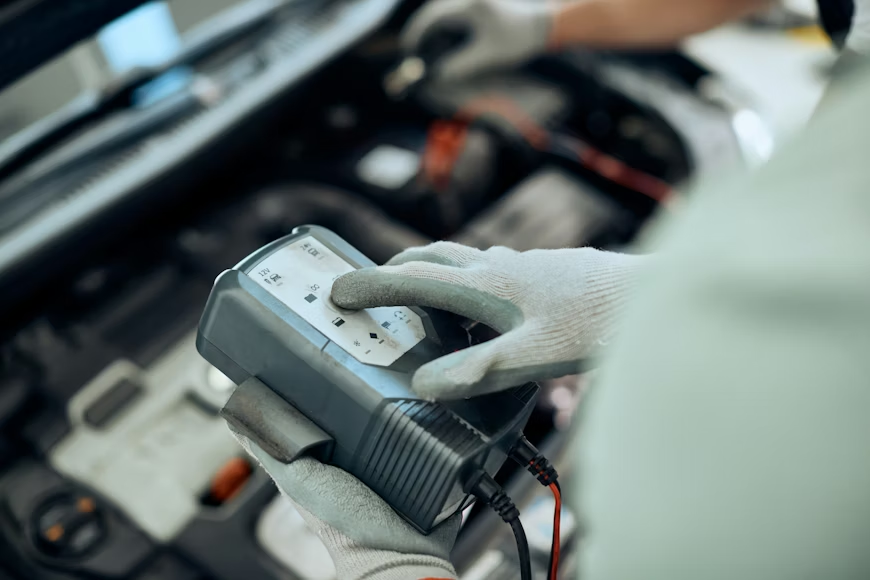
Car battery failure often feels like it comes out of nowhere, but it rarely does. Most drivers notice slow starts or dim lights long before the battery actually gives up, yet they don’t realize these are early warnings.
That’s why understanding a few simple data points can make the difference between a smooth morning and an unexpected breakdown during a busy day. In this guide, you’ll learn four easy signals to track, what they mean, and how they help you stay ahead of surprise battery trouble.
1. Cranking Voltage Drop
When you turn the key or press the start button, your battery experiences its biggest moment of stress. A strong battery maintains healthy voltage through this surge, while a weak one sags quickly. Watching this number over time gives you a real snapshot of your battery’s strength.
Before you start measuring, it helps to look for small signs that point toward deeper problems.
- Slow cranking sounds
- Headlights dimming during start
- Repeated weak starts after short drives
A pattern of repeated voltage dips usually means your battery is nearing the end of its useful life. You can test this at home, and once you know your normal reading, unusual drops stand out quickly. It’s one of the simplest ways to monitor real-world battery performance.
2. Resting Voltage Trends
Resting voltage trends reveal the long-term health of your battery. After your car sits overnight, a healthy battery usually settles into a stable range. When that number begins to drift downward day after day, it’s often an early sign of capacity loss or aging plates.
This is also the ideal moment to compare potential replacements. You can explore options on this site, where you’ll find batteries suited for different vehicles and climates. Keeping an eye on trends helps you plan sooner rather than later.
If you run short errands often, the battery may not recharge fully, and the resting voltage may dip faster. Tracking this helps distinguish normal patterns from failing battery behavior. A simple weekly log can reveal changes that would otherwise be easy to miss.
3. Ambient Heat Exposure
Heat is one of the most damaging forces working against your car battery. Even though everything seems normal, high temperatures accelerate the chemical reactions inside the battery and shorten its lifespan dramatically. Drivers in hot regions often notice subtle warning signs on the dashboard long before the battery actually fails, especially during intense summer heat.
Drivers can reduce heat-related strain with a few simple habits.
- Parking in shaded areas
- Opening the hood briefly after long drives
- Using a smart charger during extreme heat
Some drivers also monitor under-hood temperatures with simple plug-in sensors. These readings help you understand how heat waves or long traffic delays affect your battery over time. Over time, you can see how heat lines up with voltage dips and performance changes, revealing patterns you might otherwise miss.
4. Parasitic Draw Issues
Parasitic draw happens when electronics continue pulling power after you turn off the car. Small draws are normal, but faulty modules, wiring problems, or aging components can increase the drain unexpectedly. If your battery seems to weaken overnight or after a weekend without driving, parasitic draw deserves a closer look.
Many vehicles have multiple electronic systems that stay active for several minutes before sleeping. If one never fully powers down, you may see sudden and repeated voltage dips. Measuring overnight changes helps you spot these patterns long before they leave you stranded.
Even a small increase in draw can drain a battery over several nights. A low-cost multimeter or OBD device can help you identify unusual behavior quickly. With a steady testing routine, you can catch hidden issues early.
Keeping Your Car Ready
Understanding these four data points gives you the power to prevent car battery failure, not just react to it. When you know what to look for, you can plan maintenance, track aging, and replace your battery before it leaves you stuck in a parking lot or driveway.
You can explore dependable replacement options or learn more about choosing the right battery on our site whenever you’re ready to take that next step. Staying proactive keeps your car ready for every trip and gives you confidence behind the wheel.