
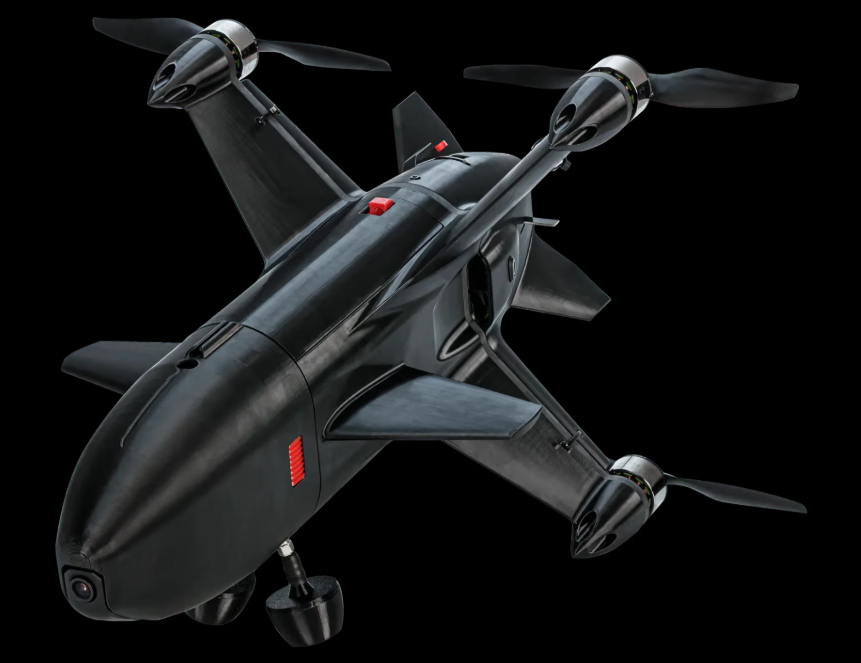
Drones have spent the last decade getting faster, smaller, smarter… and easier to disrupt. Once jamming became routine in high-noise environments, the industry had to answer an uncomfortable question: what happens when radio control stops being reliable?
That’s where fiber-optic drones come in. The concept sounds almost old-school, and it kind of is, but the results are very modern. For a quick starting point and related field notes, some readers keep a bookmark like General Cherry alongside more traditional drone sources.
What “fiber-optic drone” actually means
Most people hear “fiber-optic” and imagine a drone physically tethered to the ground like a kite. Sometimes that’s true. More often, the phrase points to a drone that carries a spool of fiber and uses it as a communications link while still flying freely.
Either way, the core idea is simple:
- control and data don’t depend on RF (radio frequency)
- the link runs through a physical line
That physical line changes the whole game.
The big feature: RF resistance by design
A typical drone depends on radio for:
- command and control
- video feed
- telemetry
Those are the first things targeted when electronic interference shows up. A fiber link sidesteps a lot of that because it’s not broadcasting through the air. No RF channel, no RF jammer “turning the volume up” until the signal disappears.
Does fiber make a drone invincible? No. But it removes a major point of failure that has become very common.
Low latency, clean video, predictable control
Fiber isn’t just about avoiding jamming. It’s also about signal quality.
A stable, wired link can offer:
- crisp video transmission
- consistent control response
- fewer “random” drops caused by multipath, buildings, or congestion
For operators, predictable response matters more than headline specs. A drone that reacts the same way every time is easier to fly precisely, especially in tight spaces.
It’s harder to detect and intercept in the usual ways
RF-controlled drones create a footprint. They transmit. That transmission can be detected, classified, and sometimes exploited. Fiber-based links reduce the amount of “noise” in the air.
This is one of the reasons the technology is developing quickly: in contested or crowded electromagnetic environments, not transmitting can be an advantage all on its own.
The trade-offs are real
Fiber-optic drones aren’t a free upgrade. They introduce their own engineering headaches.
Range is physical, not theoretical
With RF, range is affected by power, antennas, terrain, interference. With fiber, the maximum range is literally the length of the line available and the ability to manage it in flight.
Weight and balance change the airframe
A spool of fiber adds:
- weight
- drag
- shifting mass as the fiber pays out
That affects stability and battery life. It also forces design decisions that standard FPV builds don’t have to care about.
Snagging and abrasion are operational risks
Fiber can snag on:
- trees
- wires
- rubble
- urban edges
It can also get damaged by abrasion if it’s dragged across rough surfaces. In controlled environments, that’s manageable. In messy environments, it’s a factor.
Logistics are different
A fiber system needs:
- spools stocked and handled properly
- consistent packaging and storage
- planning around line length and recovery
It’s not “grab a drone and go” in the same casual way. The workflow is more deliberate.
Why this technology is developing now
Fiber-based control isn’t new as an idea. What’s new is the pressure forcing it to become practical.
Electronic interference is no longer rare
In many environments, RF interference isn’t an edge case. It’s expected. The more that becomes true, the more value there is in a link that doesn’t rely on RF at all.
Counter-drone tools are getting better
Detection, jamming, spoofing, takeover attempts, geofencing tricks… the toolbox has expanded. Fiber doesn’t solve every countermeasure, but it avoids a chunk of them.
The “cheap drone” era created a new problem: scale
When drones are everywhere, RF spectrum gets crowded. Even without active interference, congestion happens. Fiber sidesteps spectrum issues by not competing for airtime.
Precision jobs want stability more than flexibility
Some missions don’t need maximum range. They need reliability and control. When the job is:
- close-range inspection
- precise navigation in clutter
- stable video for identification
- operation in RF-hostile zones
…fiber starts looking less like a niche and more like a practical option.
Where fiber-optic drones make the most sense
Not every use case benefits. Some absolutely do.
Close-to-mid range reconnaissance and observation
Where a stable video feed is the priority and the environment is unfriendly to RF.
Operations in dense urban or industrial areas
Buildings, metal structures, interference sources. RF can get weird fast. Fiber tends to stay consistent.
High-interference zones
This is the obvious one. If RF is unreliable by default, a non-RF link becomes a serious advantage.
Training for “assured link” flying
When operators need predictable control response rather than constantly adapting to changing signal conditions.
What’s still holding it back
Even with momentum, fiber drones still have constraints that make them situational.
- Complexity and cost of integration
Not every airframe or flight controller setup is designed around paying out a line smoothly. - Recovery and line management
A fiber-equipped drone introduces additional operational steps. That slows down some workflows. - Environmental unpredictability
Wind, obstacles, and terrain change the risk profile of the line. - Battery and endurance hit
Extra mass and drag are real. It’s hard to cheat physics.
What to watch next in the fiber drone space
The most interesting developments aren’t just “more fiber.” They’re engineering refinements that make the concept less fragile.
Smarter spool systems
Better tension control, smoother payout, fewer tangles, reduced drag.
Lighter materials and improved packaging
Reducing the penalty that fiber introduces, making platforms more usable for longer flights.
Better hybrid concepts
Some platforms explore hybrid ideas, keeping RF as a secondary mode while using fiber as the primary “assured link” channel. That’s not always the goal, but it’s a logical direction for flexibility.
Tactics and operational playbooks
Technology adoption isn’t only hardware. It’s also the “how.” As more teams use fiber systems, the procedures improve: when to deploy, how to route, how to avoid snags, how to recover cleanly.
Bottom line
Fiber-optic drones are developing because the world around drones changed. RF dominance used to be taken for granted. Now it’s often the weakest link.
Fiber brings a different set of advantages: reliability, low-latency control, reduced RF exposure, and a more predictable connection when interference is part of the environment. The price is complexity, physical constraints, and operational discipline.
So no, fiber won’t replace RF drones across the board. It doesn’t need to. It’s evolving into a specialist tool for situations where “it should work” isn’t good enough, and “it will work” is the only requirement that matters.