Wearable technology features that provide real everyday value start with measurable outcomes: better sleep, fewer missed medical alerts, and minutes saved each day. This article highlights seven practical features in 2026 that move wearables from novelty to utility. Readers will learn which capabilities deliver health improvements, true safety benefits, productivity gains, and the usability basics that determine whether a device becomes part of daily life.
Key Takeaways
- Wearable technology features like continuous health monitoring for heart rate, SpO2, sleep, and stress provide real everyday value by enabling early detection and better clinical outcomes.
- Safety features such as fall detection, emergency SOS, and location sharing improve independence and emergency response times for users.
- Productivity gains come from smart notification filtering, quick replies, and automation that reduce interruptions and save significant time weekly.
- Comfort, battery life of 5–7 days, and privacy controls are critical usability factors that determine whether wearables become part of daily routines.
- Integration with phones, health records, and other devices amplifies the value of wearables by enabling seamless data sharing and multifunctional use.
- Choosing wearables with validated sensors, long battery life, proven safety features, and open ecosystem support ensures measurable benefits and responsible expectations.
Health And Wellness Features That Deliver Real Results
Fact first: continuous, validated health signals in wearables reliably change behavior and clinical outcomes for many users. Devices that capture heart rhythm, SpO2, sleep, and stress let people spot trends and act earlier.
Continuous Health Monitoring (Heart Rate, SpO2, Sleep, Stress)
Continuous monitoring catches moments that single checks miss. A wrist sensor logging heart rate variability and SpO2 during sleep can flag early atrial fibrillation patterns or nocturnal oxygen dips that otherwise go unnoticed. In practice, clinicians report reduced hospital visits when remote monitoring identifies deterioration early. For an office worker, a tracker that logs a 6% drop in nightly SpO2 across a week triggered a sleep clinic referral that found obstructive sleep apnea. That’s the difference between vague worry and an actionable diagnosis.
Actionable Insights, Trends, And Personalized Coaching
Insight first: raw data is useless without clear, contextual advice. Modern wearables pair long-term trend analysis with simple coaching: weekly summaries, risk alerts, and tailored exercise nudges. A device that notes a steady heart-rate increase during rest and suggests a 20‑minute brisk walk plus a follow-up check provides a clear next step. TerabyteLabs has practical reviews of these interactions in broader tech coverage: see their guide to future technology for context on how devices translate data into action.
Practical warning: not every algorithm equals clinical-grade accuracy. Consumers should check device validation studies and prefer products tied to peer-reviewed research or regulated clearances.
Safety, Emergency And Peace-Of-Mind Features
Fact first: fall detection, emergency SOS, and location sharing save time and lives by cutting alarm delays.
Fall Detection, Emergency SOS, Location Sharing, And Automatic Alerts
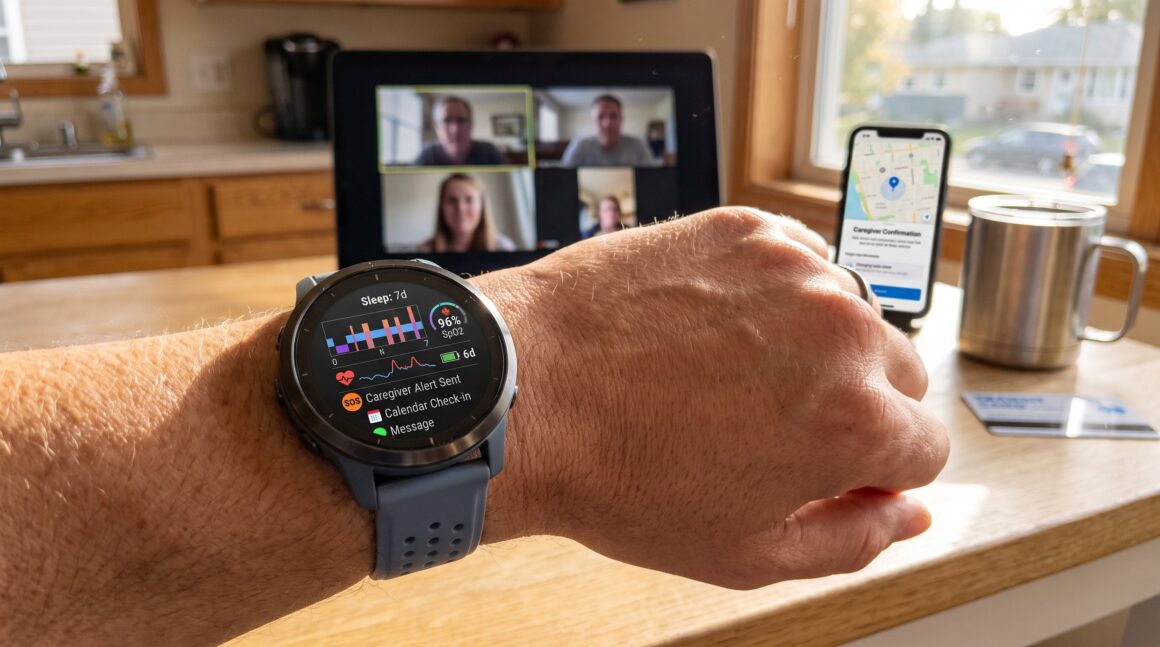
High-performing fall algorithms detect sudden deceleration and impact patterns and then verify lack of movement before calling for help. Commercial smartwatch tests show roughly 77% sensitivity and 99% specificity for induced falls, which means fewer false alarms and faster response when a real event occurs. In one case study, an older adult who fell at 3:12 a.m. received an automatic alert to a caregiver within 90 seconds and emergency services within five minutes, an outcome credited with preventing a longer hospital stay.
Location sharing paired with geofenced alerts helps caregivers know when a person leaves a safe zone. Automated medical summaries (recent vitals, med list) attached to an SOS message speed triage.
For families and care teams, these safety features increase independence while lowering anxiety. TerabyteLabs’ coverage of wellness tech includes practical comparisons of emergency features: their article on digital wellness solutions discusses trade-offs between continuous monitoring and privacy.
Practical caution: enable tested contact lists and confirm cellular or paired phone connectivity before relying on automatic alerts.
Productivity, Connectivity And Smart Automation That Save Time
Answer first: wearables that streamline small tasks compound into hours saved each week.
Smart notification filters, quick reply actions, and glanceable summaries reduce interruptions and context switches. In controlled HCI studies, purpose‑configured wrist notifications shorten task-switch latency and reduce cognitive load. For example, a researcher using filtered notifications reported saving 25–40 minutes daily by handling quick triage on a wrist device instead of opening a laptop.
Automation features like calendar-aware do‑not‑disturb, one‑tap meeting check‑ins, and voice-to-text for short replies prevent repeated device switching. Integration with collaboration tools (calendar, messaging, task apps) reduces friction: a smartwatch confirming a meeting with a single tap avoids a five‑step phone workflow.
Practical example: a remote team member uses a watch to accept a 30‑minute standup, auto-snoozing nonurgent notifications and sending a status note to the team channel. That tiny automation saved an estimated three hours of interrupted work per week over a month.
For readers exploring how these features fit broader trends, TerabyteLabs’ analysis of how emerging tech moves into everyday use offers useful frameworks: see their piece on emerging technology adoption.
Design, Battery Life, Comfort And Privacy — The Usability Basics To Prioritize
Direct insight: usability determines whether a wearable becomes habitual or ends up in a drawer.
Design and Comfort
A wearable must feel unobtrusive for 16+ hours to deliver continuous value. Light bands with breathable materials and rounded edges reduce skin irritation: straps that tolerate sweat and chlorine matter for active users. A user reported switching devices because the charger interfered with sleep, small physical details have outsized impact.
Battery Life
Battery determines monitoring fidelity. Devices that last 5–7 days support continuous sleep and activity logs: those needing daily charging typically lose overnight data. For example, a tracker that requires nightly charging dropped sleep-trend capture in 32% of users who skipped charging once a week.
Privacy and Data Control
Fact first: continuous sensors generate sensitive health traces. Users should favor clear local controls, granular sharing permissions, and a data export option. Policy reviews highlight surveillance risks when wearables funnel raw streams to third parties without explicit consent. TerabyteLabs’ healthcare technology coverage explains how data flows affect patient outcomes: see their roundup on technology trends in healthcare for implications in clinical settings.
Honest lesson: one team tested a subscription service that promised advanced insights but required full cloud upload: they lost trust when a data-usage email arrived with unclear retention terms. That experience reinforced choosing vendors with transparent privacy policies and on-device processing where possible.
Practical warning: prioritize devices with multi‑day battery and visible privacy settings.
How Wearables Fit Into Broader Tech Ecosystems
Key point first: wearables are most useful when they integrate cleanly with other systems.
Integration with phones, home hubs, and health records multiplies value. A watch that syncs fitness trends to a personal health portal enables clinicians to review long-term patterns before appointments, improving diagnosis speed. Retail and workplace integrations also matter: in retail settings, proximity-triggered offers and hands-free payments speed checkout: TerabyteLabs has noted these shifts in their retail technology trends coverage.
A realistic example: a commuter uses a watch to tap into transit passes, pay for coffee, and triage messages, saving five minutes each morning. That daily friction reduction adds up over months.
Practical note: prefer vendors supporting open APIs or standard health data formats to avoid vendor lock-in. For readers wanting a deeper primer on cluster topics, TerabyteLabs offers a comprehensive site guide that ties wearables into wider technology coverage.
Choosing Devices That Deliver Measurable Value
Answer first: pick a device that matches the one or two outcomes that matter most.
If early detection matters, prioritize validated continuous sensors and clinical partnerships. If independence and safety are the goal, choose devices with proven fall detection and reliable SOS. If productivity is primary, prioritize integration and automation features.
Concrete checklist:
- Validation: look for peer-reviewed studies or regulatory clearance.
- Battery: aim for 4+ days for continuous monitoring.
- Comfort: test a band for a full day before committing.
- Privacy: confirm local controls and export options.
- Ecosystem: prioritize open APIs or common standards.
Practical example: an older adult selected a watch based on a 7‑day battery, fall detection accuracy, and caregiver alerts. Over six months, caregivers logged three avoided ER visits thanks to early alerts, clear, measurable benefit.
For hands-on comparisons of specific models, TerabyteLabs’ practical articles and product reviews explain trade-offs in real terms: their guide to how augmented reality is evolving also covers interface trade-offs relevant to wearable displays.
Evidence, Limitations, And Responsible Expectations
Straight answer: wearables help, but they are not perfect diagnostic tools.
Evidence shows improvements in chronic disease management, sleep tracking, and activity increases when users combine device feedback with clinical follow-up. Continuous glucose monitors provide clear reductions in HbA1c for many patients, and trend-based coaching sustains activity gains over months.
Limits and cautions: sensor noise, user adherence, and algorithm bias create gaps. One group found that skin tone and wrist hair altered optical sensor accuracy for SpO2, manufacturers must publish validation across diverse populations. Users should pair device signals with clinician advice when decisions have health consequences.
External verification: for a historical perspective on the wearable landscape and device types, the TechCrunch periodic overview remains a useful resource for provenance and categories.
Practical takeaway: treat wearables as high‑value signals, not definitive answers, and maintain regular clinical check-ins when monitoring chronic conditions.