
The fear isn’t the cost. It’s the unknown. Will the connection work when I land? Will I spend my first hour in a foreign country standing in a airport kiosk line, jet-lagged and frustrated, while a clerk fumbles with a physical SIM card? After twelve international trips in three years, I’ve accumulated enough airport-hallway horror stories to know that the real price of roaming isn’t measured in dollars per gigabyte—it’s measured in minutes of confusion at the moment you need connectivity most. That’s what drew me to Iroamly esim, not because it promised the world, but because it offered something simpler: a way to test the water before jumping in.
The 500MB Question: Why a Free Trial Changes Everything
Most eSIM providers ask you to commit before you’ve ever seen their service work on your device. You pick a plan, pay, install, and hope. If something goes wrong—incompatible device, weak local partner network, or simply a setup step you misunderstood—you’re left troubleshooting in a foreign country with diminishing data.
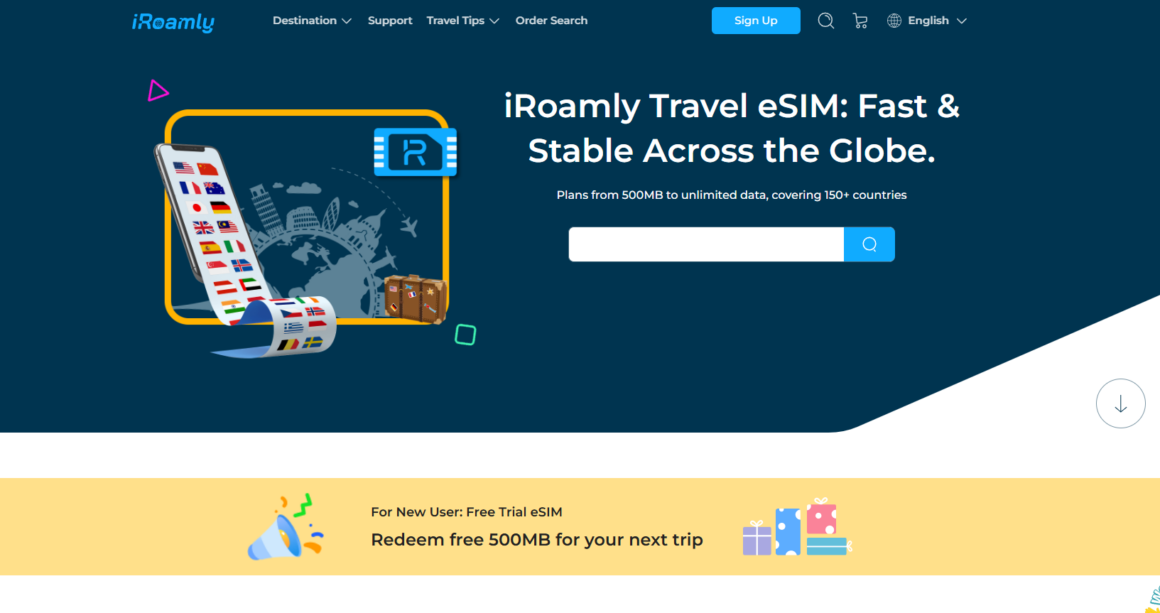
iRoamly takes a different approach. New users can claim a free 500MB eSIM covering over 100 destinations, valid for one day, with no credit card required. The trial is available for countries including Turkey, the United States, Japan, Thailand, the UK, and the UAE. You can request it through the website or download the iOS/Android app. Install it before you travel, activate it when you arrive, and test the service with zero financial risk.
What the Trial Actually Tells You
The 500MB isn’t meant to sustain a week-long trip. It’s a diagnostic tool. In my testing, that single day of free data accomplished three things:
First, it confirmed device compatibility. Not every phone supports eSIM, and even among supported devices, carrier locks can interfere. The trial lets you verify that your phone recognizes the eSIM profile before you’ve spent any money.
Second, it demonstrated local network performance. iRoamly partners with local telecom operators in each country, and network quality varies by destination. The trial gives you a real-world sample of speeds and stability in your specific travel location—not a generic promise, but actual performance data from the ground.
Third, it removed setup anxiety. Installing an eSIM for the first time can feel unnerving. The trial walks you through the same activation flow you’ll use for a paid plan, so when you’re standing in a foreign airport with a full-priced package, you already know exactly what to do.
What 500MB Looks Like in Practice
In practical terms, 500MB covers about an hour of YouTube, sixty minutes of social media scrolling, or thirty minutes of video calling. It’s enough to navigate from the airport to your hotel, send messages to confirm your arrival, and test whether the connection holds in crowded areas. It is not enough for streaming, heavy photo uploading, or remote work. The trial’s purpose is verification, not vacation data.
The Purchase Decision: What You Learn Before You Pay
Once the trial confirms that the service works on your device and in your destination, the paid plans become a much clearer decision. iRoamly offers three plan structures: Daily plans with fixed data allowances, Total plans with a full data volume for the trip duration, and Unlimited plans. All paid plans support unlimited hotspot sharing, which distinguishes them from competitors that restrict tethering.
Daily Plans: Predictable Costs for Short Trips
For city breaks of three to five days, Daily plans offer a straightforward cost structure. You pay a fixed rate per day for a set amount of data. In Turkey, unlimited daily plans start at $2.50 per day. The pricing is transparent—no throttling after a few gigabytes, no surprise overage fees.
Total Plans: Bulk Data for Longer Stays
For trips spanning a week or more, Total plans provide a single data pool that lasts the duration of your trip. This structure suits travelers who know their approximate usage and prefer not to think about daily caps. The Asia 90GB/365-day plan, for example, works out to less than $14 per month for anyone spending the year in Southeast Asia.
Unlimited Plans: Freedom From Counting
The Unlimited option removes the mental overhead of tracking consumption. You pay for the duration, and data flows without caps. The key distinction from competitors: iRoamly does not throttle speeds unexpectedly. In practice, this means video calls, navigation, and social media all perform consistently throughout the trip.
The Installation Logic: Why Timing Matters More Than You Think
The installation process follows a clear sequence, but the timing constraint is worth understanding before you buy.
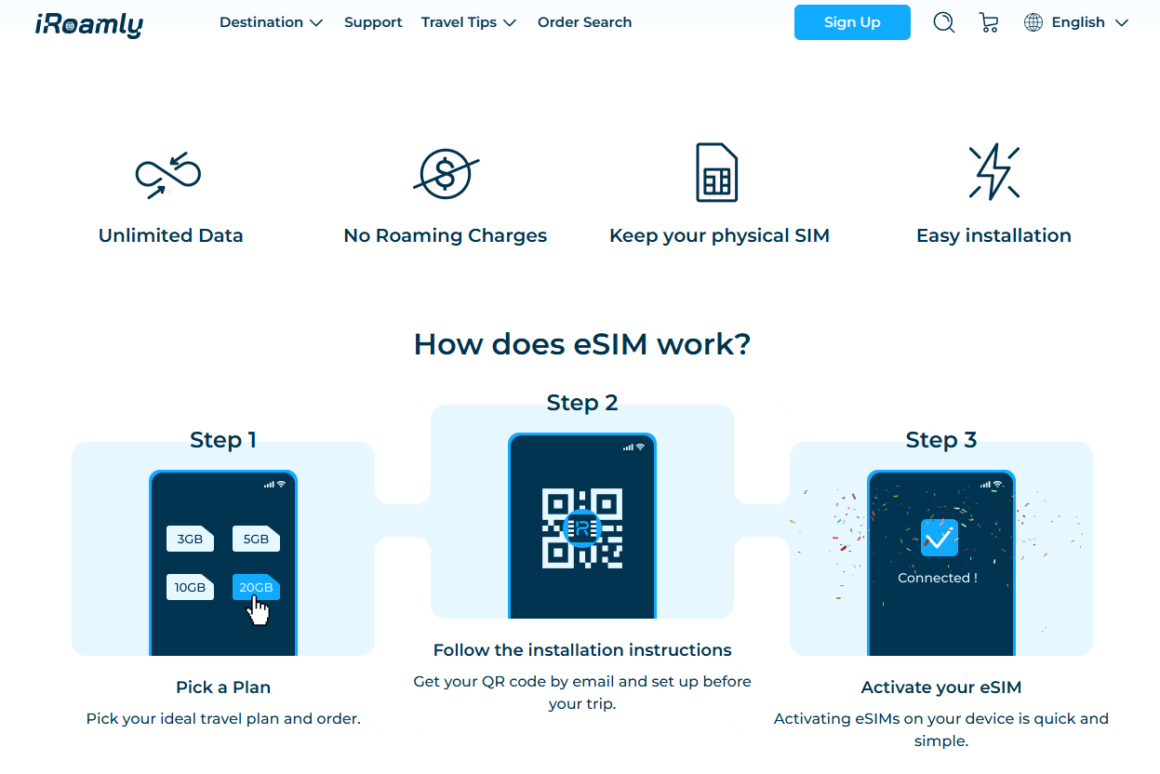
Step 1: Purchase and Receive
After selecting your plan and completing checkout, the eSIM details arrive via email within seconds—a QR code and a manual activation key. No waiting for physical delivery, no complicated registration process.
Step 2: Install Before Departure
The guide recommends installing the eSIM a day or two before your trip, while you have a stable Wi-Fi connection. Scanning the QR code installs the profile on your device. The key instruction: keep data roaming disabled on your primary SIM during installation to prevent accidental carrier charges.
Step 3: Activate on Arrival
After landing, enable data roaming for the iRoamly line only, leaving your primary SIM intact. The eSIM connects automatically to a local network, and the validity counter starts from the first successful connection—not from the time of purchase or installation. This timing logic protects you if you install early; the clock doesn’t start until you actually use the service.
Real-World Testing: What the Trial Revealed in Practice
I took the turkey esim through a two-week test across urban centers, coastal towns, and cross-border transfers. The results varied by context, which is exactly what you’d expect from a service that relies on local partner networks.
Urban Performance: Grand Bazaar to Taksim Square
In Istanbul’s crowded tourist districts, where thick stone walls and dense crowds often cripple mobile signals, the connection maintained a stable 4G link. Maps loaded without delay, voice messages sent instantly, and video calls held steady with occasional pixelation during peak afternoon hours. For everyday navigation, messaging, and social media, the performance was indistinguishable from what I’d expect at home.
Coastal Coverage: Moving Away From Cities
Along the Turkish coast, the service delivered a reliable connection through smaller towns where local infrastructure is thinner. Speeds occasionally dropped from 4G to 3G in remote areas, but basic functions—maps, email, messaging—continued working. For travelers planning to work from cafes in less touristy regions, the connection proved sufficient for email and light browsing.
Cross-Border Transfers: Seamless or Not?
For multi-country itineraries, regional eSIM options eliminate the hassle of buying separate plans for each border crossing. The service automatically connects to the local partner network in each country. In my testing across three Mediterranean locations, the transition was seamless—no manual switching, no reinstallation, no unexpected downtime.
Where the Free Trial Falls Short
The trial is useful, but it has limitations worth acknowledging before you rely on it for critical trip planning.
One Day, One Device
The 500MB trial is valid for one day and is limited to new users. You cannot extend it, stack multiple trials, or use it to cover an entire trip. Its purpose is verification, not replacement for a paid plan.
Coverage Quality Depends on Local Partners
As an eSIM reseller that partners with local telecom operators rather than operating its own towers, network quality varies by country and partner. The trial gives you a sample, but performance can fluctuate based on location, time of day, and network congestion.
No Native Calling or SMS
The service provides data only—no native phone number for calls or SMS. If you need to receive banking verification codes via text or make traditional phone calls, you’ll need to rely on VoIP apps. This wasn’t a dealbreaker for me, but it’s a limitation that could matter for travelers who depend on two-factor authentication.
Who Benefits Most From the Trial Approach
The free trial model serves specific traveler profiles better than others.
First-time eSIM users gain the most. The trial removes the fear of incompatibility and lets you practice the installation flow before you’re standing in a foreign airport with limited options.
Travelers visiting unfamiliar destinations benefit from testing local network performance before committing to a full plan. If the local partner network is weak in your specific area, you’ll know before you’ve spent money.
Short-trip travelers can sometimes use the trial for a single day of basic connectivity—enough to navigate from the airport to their hotel and send arrival messages.
Long-term travelers should treat the trial as a diagnostic, not a solution. The 500MB won’t sustain a week of remote work or heavy media use. You’ll still need a paid plan for the bulk of your trip.
The service doesn’t try to be everything. It offers a low-risk entry point, clear plan structures, and a setup process that rewards preparation over improvisation. For travelers who value knowing what they’re getting before they pay, the free trial transforms the decision from a gamble into a test you can actually run.