
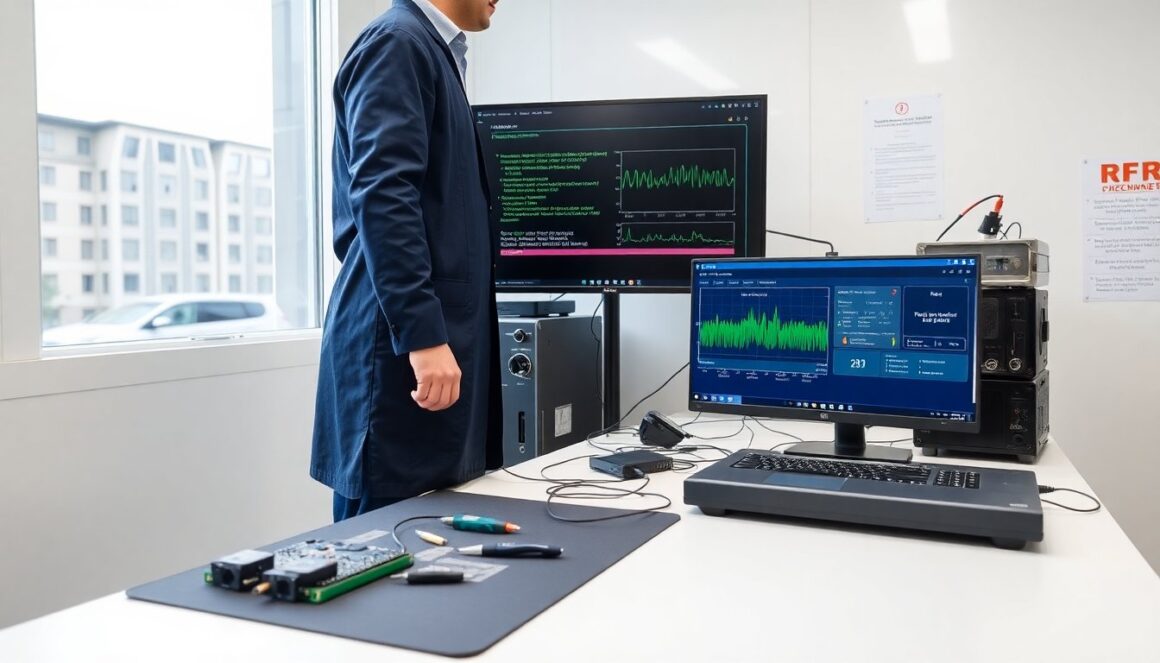
IntelTech BMR modulation instructions TerabyteLabs appear at the start of this guide to aid setup. It states the exact steps for BMR modulation on TerabyteLabs hardware. The guide assumes the reader has basic hardware skills and the correct TerabyteLabs model. It lists required tools, safety checks, and validation steps. It stays direct and clear for quick implementation.
Key Takeaways
- IntelTech BMR modulation instructions for TerabyteLabs outline a precise method to modulate baseband and radio units for improved spectral shaping and link stability.
- Successful implementation requires TerabyteLabs hardware with firmware version 4.2 or later and access to the hardware console with admin privileges.
- Step-by-step setup includes preparing the workspace, uploading modulation profiles, configuring the FPGA, and validating transmissions with careful monitoring of error rates and spectrum metrics.
- Strict safety and validation protocols must be followed, including power and grounding checks, firmware and driver verification, and 10-minute soak tests to ensure stable operation.
- Maintaining a rollback plan with labeled backups and detailed documentation is essential for recovery if validation fails and for ongoing compliance and audit purposes.
What IntelTech BMR Modulation Is And When To Use It
IntelTech BMR modulation instructions TerabyteLabs define a modulation method for baseband and radio units. It applies to devices that handle mixed-signal processing on TerabyteLabs boards. Engineers use it when they need predictable spectral shaping and low-latency transfer. The method changes carrier phase and amplitude in fixed patterns. The technique reduces interference for tightly packed channels. It also improves link stability in congested bands.
The guide clarifies system requirements. It lists CPU, firmware, and FPGA versions that support the method. It advises that the TerabyteLabs driver must be at or above release 4.2. It states that the IntelTech BMR modulation instructions TerabyteLabs require access to the hardware console and configuration utilities. The guide warns that users should apply the method only on certified test benches or approved production lines. It notes that the method does not suit every board revision and that users must verify compatibility before proceeding.
Step-By-Step IntelTech BMR Modulation Instructions For TerabyteLabs Hardware
Prepare the workspace. The technician powers off the device and removes external power. The technician grounds themselves and mounts the board on an anti-static mat. The technician installs firmware 4.2 or later and reboots the system.
Open the TerabyteLabs console. The operator logs in with an admin account. The operator runs the command set: enable-bmr –mode standard. The console confirms the IntelTech BMR modulation instructions TerabyteLabs mode. The operator uploads the modulation profile. The profile file name must follow the format bmr_profile_v#.json. The operator validates the checksum with the command check-profile –file bmr_profile_v#.json. The console returns OK.
Configure the FPGA. The engineer flashes the FPGA bitstream that matches the profile. The engineer runs flash-fpga –file fpga_bmr_v#.bin. The tool reports write progress and success. The engineer sets the carrier parameters. They issue set-carrier –freq 2.45GHz –power -3dBm –spacing 100kHz. The device acknowledges the settings.
Apply the IntelTech BMR modulation instructions TerabyteLabs command sequence. The operator runs bmr-init –profile bmr_profile_v#.json –apply. The system loads the profile and stages modulation tables. The operator waits for the ready state. The console shows status READY.
Start a controlled transmission. The operator issues start-tx –duration 60s –monitor true. The monitoring utility logs modulation symbols and error rates. The operator watches BER and spectrum metrics. The operator stops the transmission when metrics stay within thresholds.
Save the configuration. The operator runs save-config –slot 1 –label “BMR_Standard_v#”. The utility confirms the save. The operator documents the steps and attaches logs to the hardware ticket. The documentation includes the exact IntelTech BMR modulation instructions TerabyteLabs commands and the profile checksum.
Troubleshooting, Safety Checks, And Validation Best Practices
Perform safety checks first. The technician verifies that the power supply meets the board rating. The technician checks that the ground connection is solid. The technician confirms that cooling fans operate. The technician keeps a fire extinguisher nearby when testing high-power transmit sequences.
If the system fails to enter BMR mode, check firmware and driver versions. The support team verifies that firmware is 4.2 or later. The team confirms that the TerabyteLabs kernel module loads without errors. The team reviews dmesg and system logs for load failures. Reflash the firmware only if logs show corrupt images.
If the transmission shows high error rates, inspect the profile and carrier settings. The engineer compares the active profile to the approved bmr_profile_v#.json. The engineer confirms carrier frequency and spacing. The engineer lowers power in 1 dB steps and reruns the test. The engineer runs a loopback check to isolate RF chain faults. The engineer swaps cables and antennas if the loopback fails.
If the FPGA flash fails, verify the bitstream checksum. The engineer runs check-bitstream –file fpga_bmr_v#.bin. The system rejects mismatched checksums. The engineer uses a verified repository to obtain a correct bitstream. The engineer repeats the flash with secure mode enabled.
Validate the setup after changes. The technician runs a 10-minute soak test. The technician records BER, spectral mask, and temperature. The technician compares results to the baseline. The technician signs off when metrics meet acceptance criteria.
Keep a rollback plan. The operator saves the previous configuration to slot 0. The operator labels backups with date and ticket ID. The operator documents all changes and attaches raw logs. If validation fails, the operator restores the previous config with restore-config –slot 0.
For ongoing safety and compliance, the team runs periodic audits. The team schedules weekly checks on critical systems. The team archives test logs for at least 90 days. The team updates the IntelTech BMR modulation instructions TerabyteLabs documentation after any change to firmware, profile, or hardware.