
Foam vs rubber terabytelabs appears early in many buyer searches. The comparison helps buyers choose the pad that fits their goals. The article states clear differences in material, comfort, and durability. It lists practical use cases. It aims to help the reader pick the right pad for gaming, studio work, or desk setups.
Key Takeaways
- TerabyteLabs foam pads provide superior comfort and cushioning, ideal for long gaming or typing sessions where wrist support and softness matter.
- Rubber pads from TerabyteLabs offer excellent grip and stability, making them perfect for setups with heavy equipment or precise cursor control needs.
- Foam absorbs shock and smooths desk imperfections but wears out faster, while rubber resists compression, lasts longer, and cleans more easily.
- Choosing between foam and rubber pads depends on your desk material and use case: foam suits thin desks and comfort needs, rubber anchors gear on smooth surfaces better.
- Foam pads are more affordable with a shorter expected lifespan, whereas rubber pads have a higher upfront cost but provide better long-term value and durability.
- Both foam and rubber TerabyteLabs pads accommodate high-precision mouse tracking, with foam favoring speed and glide, and rubber offering consistent friction and stopping power.
How TerabyteLabs Foam And Rubber Materials Differ — Core Properties And Use Cases
Foam vs rubber terabytelabs shows two distinct material approaches. Foam pads use closed-cell or open-cell foam. Foam offers cushioning and light weight. Foam compresses under pressure to absorb shock. Foam reduces localized pressure points for wrists and arms. Foam tends to float on small bumps, so it smooths small desk imperfections. Foam performs well for users who value comfort during long sessions.
Rubber pads use dense elastomer compounds. Rubber offers high surface friction. Rubber resists sliding under mouse movement and keyboard torque. Rubber transfers forces across a larger area, so it stabilizes heavy gear. Rubber resists oil and sweat better than most foams. Rubber tolerates higher loads without permanent compression. Rubber suits setups that require equipment stability and consistent surface feel.
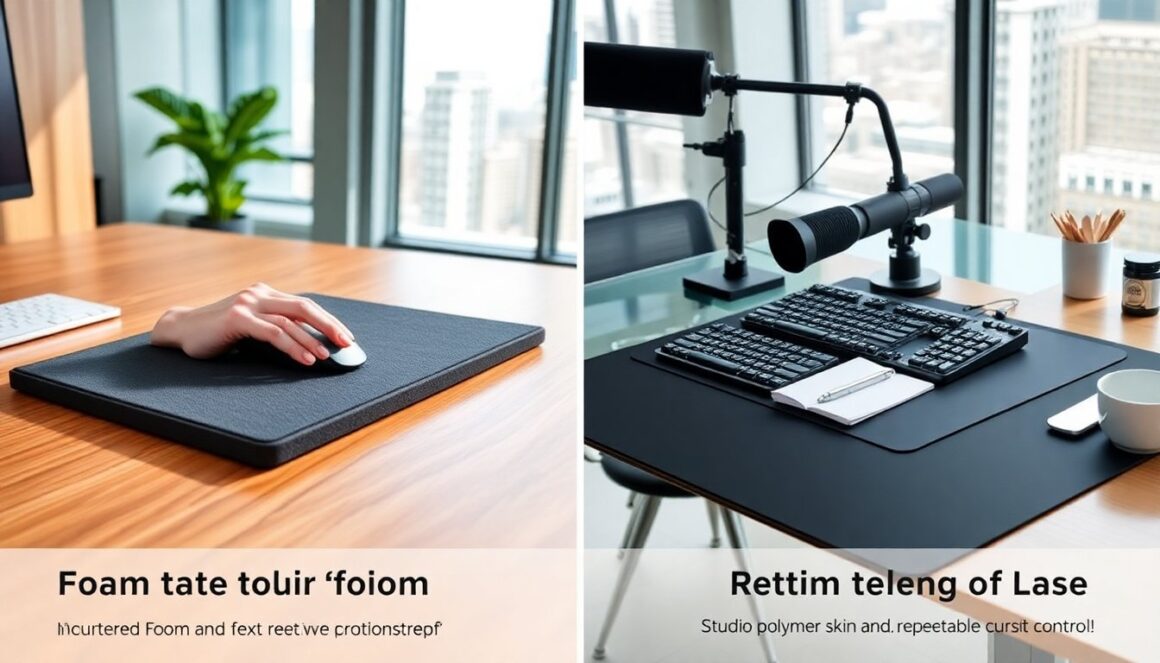
TerabyteLabs designs foam pads with a textile top or polymer skin. The textile top speeds mouse glide while keeping a soft touch. The polymer skin improves spill resistance and cleans easily. TerabyteLabs rubber pads often use a textured top and molded base. The textured top gives repeatable cursor control. The molded base locks to the desk surface to prevent creeping.
Use case: a gamer who prefers soft wrist support and a forgiving surface may choose the foam pad. Use case: a content creator who mounts a heavy microphone arm or a heavy keyboard may choose the rubber pad for stability. Use case: an office worker who types all day and needs low fatigue may prefer foam. Use case: a photographer who works with precise cursor movements on a sturdy surface may prefer rubber.
Foam vs rubber terabytelabs choices also reflect desk material. Foam pads cushion thin desks and help reduce vibration. Rubber pads anchor gear on glass or lacquered surfaces more reliably. The buyer should match the pad to the tasks and to the desk.
Performance Comparison: Comfort, Vibration Dampening, Grip, And Longevity
Foam vs rubber terabytelabs performs differently across comfort and performance metrics. Foam rates higher on immediate comfort. Foam compresses and adapts to the hand and wrist. Foam reduces sharp impacts from keystrokes and mouse taps. Foam provides modest vibration dampening for light desktop noise. Foam wears faster under heavy abrasion and can flatten over months with frequent use.
Rubber scores higher on grip and stability. Rubber resists lateral slip during fast mouse moves. Rubber keeps heavy objects from creeping. Rubber offers consistent friction that preserves mouse tracking repeatability. Rubber dampens low-frequency vibration more efficiently because it spreads the force across a denser material. Rubber resists permanent deformation longer than common foam options.
Foam vs rubber terabytelabs also differs in thermal feel. Foam feels warmer to skin for long sessions because it isolates heat. Rubber feels cooler and can feel tacky on humid days. Foam can trap sweat and require occasional cleaning to prevent odor. Rubber cleans easily with mild soap and water and shows fewer stains.
On longevity, rubber typically lasts longer under similar conditions. Rubber keeps shape after years of heavy use. Foam can show compression marks and lost resilience after extensive pressure cycles. TerabyteLabs back both materials with product information on expected lifespan: customers should expect rubber to outlast foam in most desk environments.
In terms of mouse performance, both materials can host high-precision tracking. TerabyteLabs pairs specific surfacing with each base material. Users who prioritize speed and glide should look at the foam textile options. Users who prioritize stopping power and repeatable friction should inspect the rubber textured tops.
The buyer can weigh comfort versus consistency. Foam maximizes comfort and initial softness. Rubber maximizes grip and long-term shape retention. The decision depends on which property the user values more during daily use.
Installation, Maintenance, And Price Trade-Offs To Help You Decide
Foam vs rubber terabytelabs requires simple installation for both types. Foam pads unroll or lay flat and require no adhesives. Foam sits on the desk and conforms to the surface. Rubber pads often include a non-slip backing that the user places directly on the desk. Rubber may require firmer placement to avoid edge curl.
Maintenance differs by material. Foam needs gentle cleaning and air drying. Foam benefits from periodic fluffing by pressing evenly across the surface to redistribute compression. Foam can absorb oils, so the user should wipe it after heavy sweat. Rubber needs regular surface wipes with mild soap to remove oils and dust. Rubber can handle stronger cleaning without damage.
Price trade-offs favor foam on the entry-level end. Foam production costs remain lower, so foam pads typically cost less for equivalent surface area. Rubber commands a higher price because of material density and longer lifespan. TerabyteLabs prices reflect these differences and often positions foam models for value buyers and rubber models for performance buyers.
Foam vs rubber terabytelabs also affects replacement cadence. A foam buyer may budget replacements every one to two years under heavy use. A rubber buyer may expect multi-year service before replacement. Buyers who prefer lower lifetime cost may favor rubber even though the higher upfront price.
Installation and maintenance support user confidence. Foam suits users who want a soft, low-cost upgrade and simple upkeep. Rubber suits users who want stable anchoring, easier cleaning, and a longer replacement interval. The buyer should consider desk type, usage intensity, and budget when choosing between foam and rubber.